Truth Report Business launches with a giant of South African retail in conversation with Rob Hersov. Wiese’s confidence in the country is striking. So is his warning that knowing what needs to change is only the beginning.
Rob Hersov wants a president willing to change direction. Christo Wiese wants to know whether the political system would let him survive the attempt.
That disagreement is the most revealing moment in a conversation otherwise rich in agreement about South Africa’s possibilities. Hersov imagines a decisive turn towards investment and deregulation. Wiese responds with the problem of power: a leader who moves faster than his political organisation will tolerate may find himself removed before the promised recovery arrives.
It is a substantial opening for Truth Report Business. This special launch edition, recorded at the Stellenbosch Tatler and Truth Report Symposium, brings one of South African business’s defining figures into conversation with one of its most outspoken voices. The subject is the country both men have chosen to back, and the distance between recognising its potential and realising it.
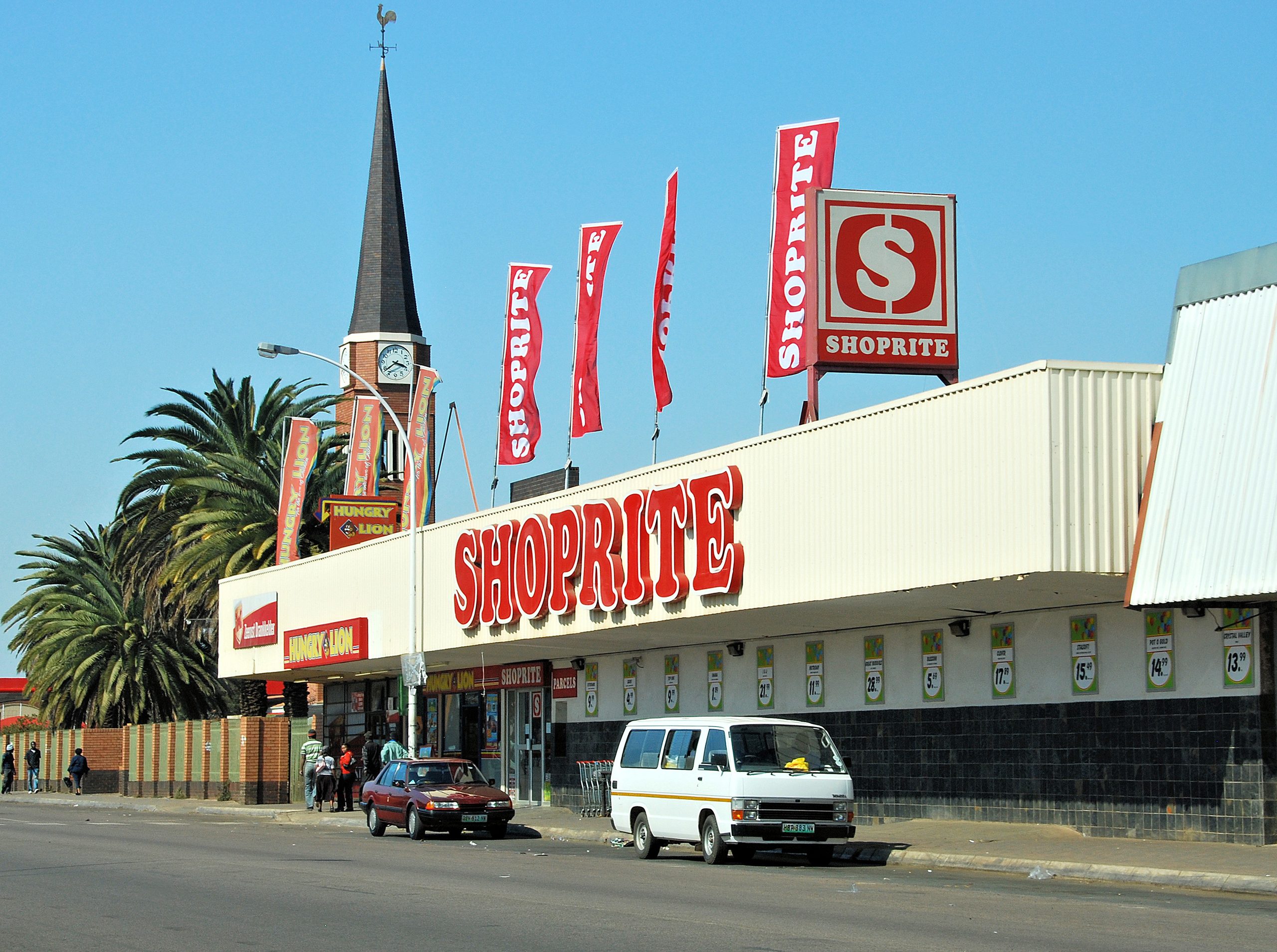
Wiese’s presence gives the occasion particular weight. His career belongs to the history of businesses that became part of everyday South African life. Shoprite’s corporate history records the acquisition of an eight-store grocery company in 1979, followed by Checkers in 1991 and OK Bazaars in 1997. It identifies Wiese as the group’s founder. The achievement was collective, built through management, capital and the work of employees, but his place in it is substantial.
His perspective comes from an industry that must keep persuading people to walk through the door. A retailer’s future depends on what customers can afford. That simple relationship becomes one of the conversation’s most useful arguments about the country.
A businessman who still sees room to build
Wiese’s optimism begins with comparison. He resists judging South Africa against an imagined country without difficulties. Other societies have serious problems, he argues; here, he believes, the solutions are often visible.
He sees particular strength in the private sector’s ability to organise people, deploy money and repair failing systems. In his assessment, many of the infrastructure problems that discourage investors could be addressed within a few years if that capacity were given sufficient room.
That is an ambitious judgment about speed. It deserves to be heard as Wiese’s assessment, rather than treated as an engineering schedule. Financing a railway, maintaining a municipal water system and expanding electricity transmission each requires decisions, competent institutions and sustained execution. Commercial willingness is valuable, but it does not make those tasks interchangeable.
There is independent support for the direction of his argument. The OECD’s 2025 economic survey identified electricity, rail and port constraints, skills shortages and barriers to doing business as impediments to growth. Its diagnosis gives reform a concrete purpose: make it easier to produce, move goods, invest and employ people.
The same evidence challenges any suggestion that recovery will be painless. The survey reported average annual growth of just 0.7 per cent over the preceding decade, below population growth. It described persistent poverty and limited access to employment. A recovery has to overcome the consequences of that long period of weak performance.
The OECD’s June 2026 outlook offers a useful measure of the gap between possibility and expectation. It projected growth of 1.2 per cent in 2026 and 1.6 per cent in 2027, with investment strengthening gradually as reforms progressed. Those were forecasts, not realised outcomes. They describe improvement, but hardly the sudden release of prosperity that an impatient country would welcome.
Hersov’s change of mind
Wiese turns the questioning back on Hersov. What has persuaded a prominent critic of the country’s investment climate to commit money here?
Hersov’s answer is personal and commercial. He says he is living in South Africa, encountering capable people and finding opportunities. He describes investments in property and technology, alongside an expectation that a more favourable political direction could attract much larger flows of capital.
His account has the force of someone putting his own judgment to work. It is also a reminder that conviction and uncertainty can coexist. Hersov is hopeful about the country while acknowledging his nervousness about it.
For South Africans abroad, this is a familiar distinction. Affection for home may encourage interest, but an investment still has to make sense. The return of talent and money would require confidence in particular projects, dependable rules and the ability to operate. Hersov’s expectation is a proposition about what could happen, rather than evidence that investors have already committed to it.
Wiese’s contribution is to make the debate less abstract. He says he continues to invest because he sees opportunities. His optimism is an account of how he chooses to act.
The president and the system
The conversation becomes more demanding when it turns to Cyril Ramaphosa. Wiese argues that criticism of a president’s performance can coexist with concern about the alternatives and recognition of the constraints around him. Hersov presses for a much sharper break with existing policy.
Their difference is consequential. If the main obstacle is a leader’s unwillingness to act, the remedy seems to be courage. If the obstacle also lies in the coalition of interests that sustains the leader, change requires a political agreement capable of lasting beyond an announcement.
Wiese’s interest in an independent president grows out of that concern. He raises the possibility of leadership less bound to party interests, while acknowledging the need to consider its powers and removal.
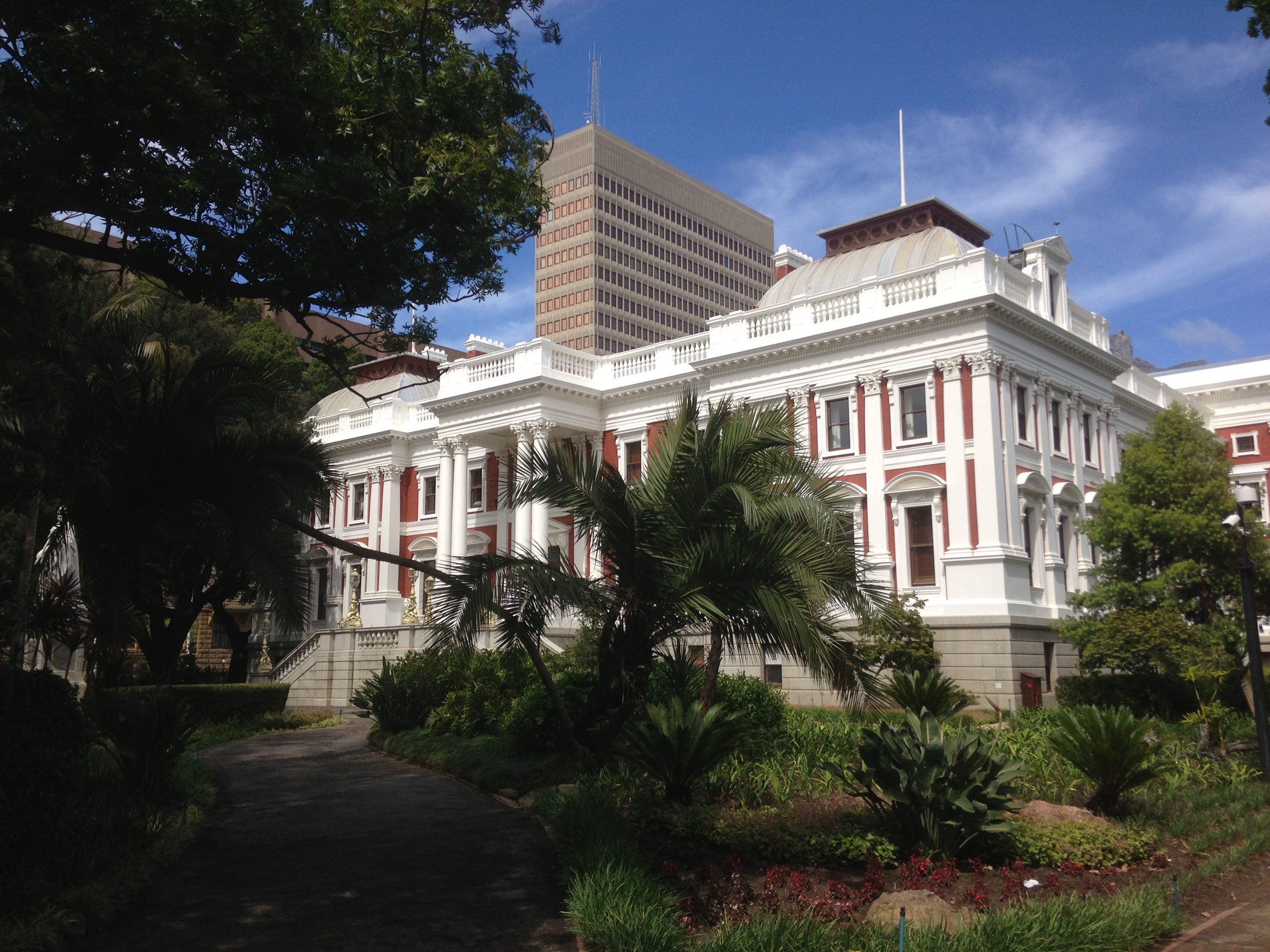
The constitutional starting point matters. Section 86 provides for the National Assembly to elect the president from among its members; section 102 provides for a motion of no confidence. The presidency is therefore tied to parliamentary authority. Calling a candidate independent would not, by itself, remove the need to secure and retain political support.
An alternative arrangement would need to explain how authority is granted, how a programme becomes law and how failure is corrected. Otherwise, the hope of escaping factional politics risks leaving the practical questions unanswered.
Wiese’s approach to municipal coalitions is more immediate. He wants parties to negotiate with attention to governing records and the need to keep places functioning. He worries that personal animosity can overwhelm common interests. For residents, the point of an agreement would be whether it produces a government able to maintain services and take responsibility for results.
Why prosperity must spread
The strongest commercial argument Wiese makes is also the simplest: businesses need prosperous customers and neighbours. A society in which too few people can buy what is being sold places limits on enterprise itself.
That helps explain an important qualification in his comments on economic redress. He accepts the need to respond to South Africa’s history. His criticism concerns whether the benefits of the approach taken have reached widely enough. The distinction deserves attention because it leaves a substantive question for any replacement policy: how would it broaden opportunity, and how would its results be judged?
There is a personal counterpart to this outlook. Asked about his passions, Wiese talks about family. When discussing adversity, he emphasises gratitude and the decision to resist bitterness. These are accounts of his own priorities, not prescriptions everyone can easily follow. Financial security changes the consequences of a setback. Even so, they help explain why his conversation repeatedly returns to the possibility of doing something useful next.
Near the close, an audience question turns to South Africa’s reputation abroad. Wiese’s answer is that the country must demonstrate improvement. The argument brings the discussion back to consequences that people can observe.
That is a demanding place to begin Truth Report Business. A monumental guest has made the case for continued commitment to South Africa. The measure of that confidence will be what follows: a business able to expand, goods reaching a market, a municipality doing its job, a household with a more dependable income. Those are the changes that would make belief in the country easier to share.