


Afrika Mayibuye has gained a foothold in municipal politics. Its promise of dependable government now needs public agreements, credible budgets and measurable improvements in basic services.
Floyd Shivambu wants Afrika Mayibuye Movement to be judged by the governments it helps put in place. The useful test of that ambition begins after the mayor is elected: whether the governing arrangement can keep water flowing, pay its bills and account for the money it spends.
The party has entered that contest with a modest electoral base and larger ambitions. SABC reported on 8 November that Shivambu claimed 57 council seats across 34 municipalities in seven provinces. That is his reported tally at that date, rather than a measure of decisive voting power in every council. Coalition influence depends on the arithmetic of each municipality and the alternatives available to its other parties.
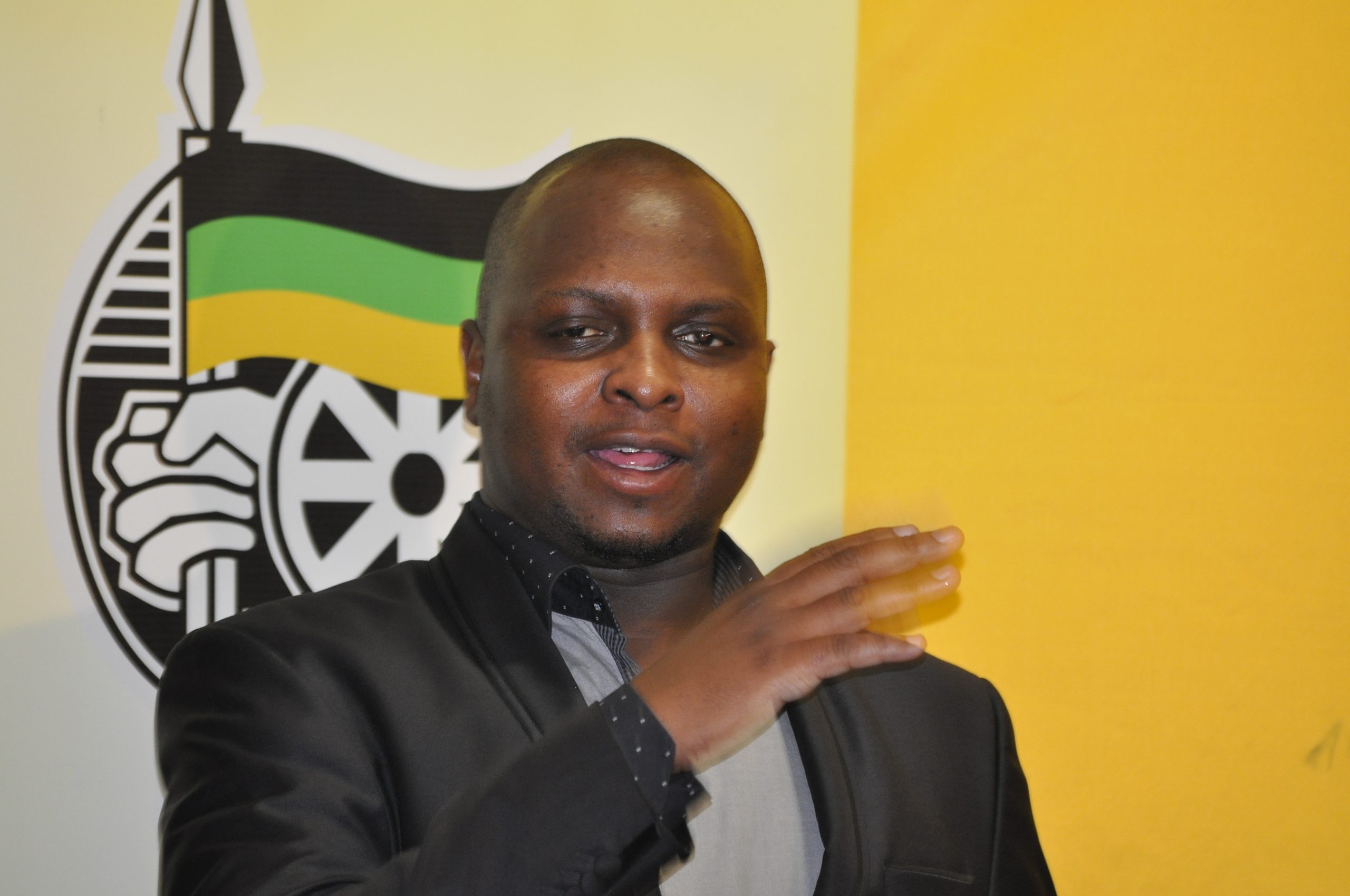
In his Coalition LIVE interview, Shivambu’s pitch was pragmatic: listen to competing proposals, assess municipalities individually and make stable services the organising principle. He placed Johannesburg’s institutional structure, informal-settlement upgrading and dependable water, electricity and refuse removal on the bargaining table.
Those are useful priorities. They become politically meaningful when a coalition identifies the responsible office, the money available and the deadline for delivery. Without those commitments, an agreement to pursue stability offers residents little basis for deciding whether a new administration is succeeding.
A condition that needs explaining
The public position is already more specific than an open invitation to talks. SABC reported on 15 November that Shivambu said Mayibuye had agreed to coalitions with the ANC in several hung municipalities, provided the ANC did not work with the DA. The same report attributed to him a refusal to support the ANC in Emfuleni because of its service-delivery record.
A meeting with a party does not oblige Mayibuye to govern with it. Nor does willingness to negotiate mean that every prospective partner is acceptable. But residents are entitled to an explanation of how conditions on political partners advance the service commitments used to justify a coalition.
Emfuleni illustrates the question particularly clearly. If local performance can disqualify a partner there, each proposed governing agreement elsewhere should explain why its participants are capable of delivering. A national relationship between party leaders cannot answer that municipal question on its own.
The available report establishes Shivambu’s stated position. It does not establish that every proposed arrangement has been signed, implemented or proved durable. Those distinctions matter when announcements made during negotiations are presented as settled government.
The funding argument needs a denominator
Shivambu’s wider argument is that municipalities carry daily service responsibilities without an adequate share of public resources. He advocates stronger local funding through the equitable share and conditional grants. The equitable share is a transfer allocated to municipalities; conditional grants finance specified purposes under attached rules.
There is a legitimate debate about the match between responsibilities and resources. But a percentage of nationally divided revenue cannot, by itself, describe the total resources available to local government. Section 229 of the Constitution authorises municipal property rates and surcharges on fees for services, subject to constitutional and legislative limits. Locally raised income must therefore form part of any serious assessment of a municipality’s means.
Treasury’s 2026 Budget Review, table 6.4, estimates direct local-government transfers of R182.278 billion for 2026/27 and indirect transfers of R7.473 billion. These are budget estimates, and indirect transfers fund activity undertaken on municipalities’ behalf. Neither figure is a total municipal revenue measure.
The distinction does not settle whether transfers are sufficient. It identifies what a persuasive funding case must show: the cost of assigned services, the revenue realistically collectible, the support needed for poorer households and the gap left after those calculations.
Municipal failure is widespread, but uneven
The Auditor-General’s 2024/25 findings record 39 clean municipal audits, about 15% of the country’s 257 municipalities. None of the eight metros achieved a clean audit. That is strong evidence of a governance problem, though an audit opinion is not a direct measure of every household’s service experience.
The same findings qualify any claim of universal, unchanging failure: 72 municipalities improved their audit outcomes compared with 2020/21, and the number receiving disclaimed opinions fell from 29 to eight. A disclaimer means auditors could not obtain sufficient evidence to form an opinion on the financial statements. Improvement on that measure matters, even where serious weaknesses remain.
More money and stronger administration are connected questions. Treasury’s Budget Review identifies weak billing, collection and financial discipline as causes of municipal instability, alongside rising water and electricity input costs. A funding campaign that leaves those weaknesses untouched risks increasing the resources passing through an unreliable system.
Make the agreement visible
Mayibuye’s practical opportunity is to insist that each coalition publish commitments residents can check. Those should include a funded maintenance programme, transparent appointments, reporting on service interruptions and a process for dealing with missed targets. The agreement should also explain how disputes will be resolved without repeatedly disabling the administration.
These are proposed accountability tests, not evidence that Mayibuye or its prospective partners have adopted them. Their value is that they would let residents compare the promise with the result.
Shivambu is right to put the daily work of municipalities at the centre of coalition bargaining. His party’s credibility will depend on the terms it secures and the conduct it tolerates once government is formed. A council seat creates an opportunity to demand better government. Residents will know its worth when the agreement starts changing the services on their street.


