

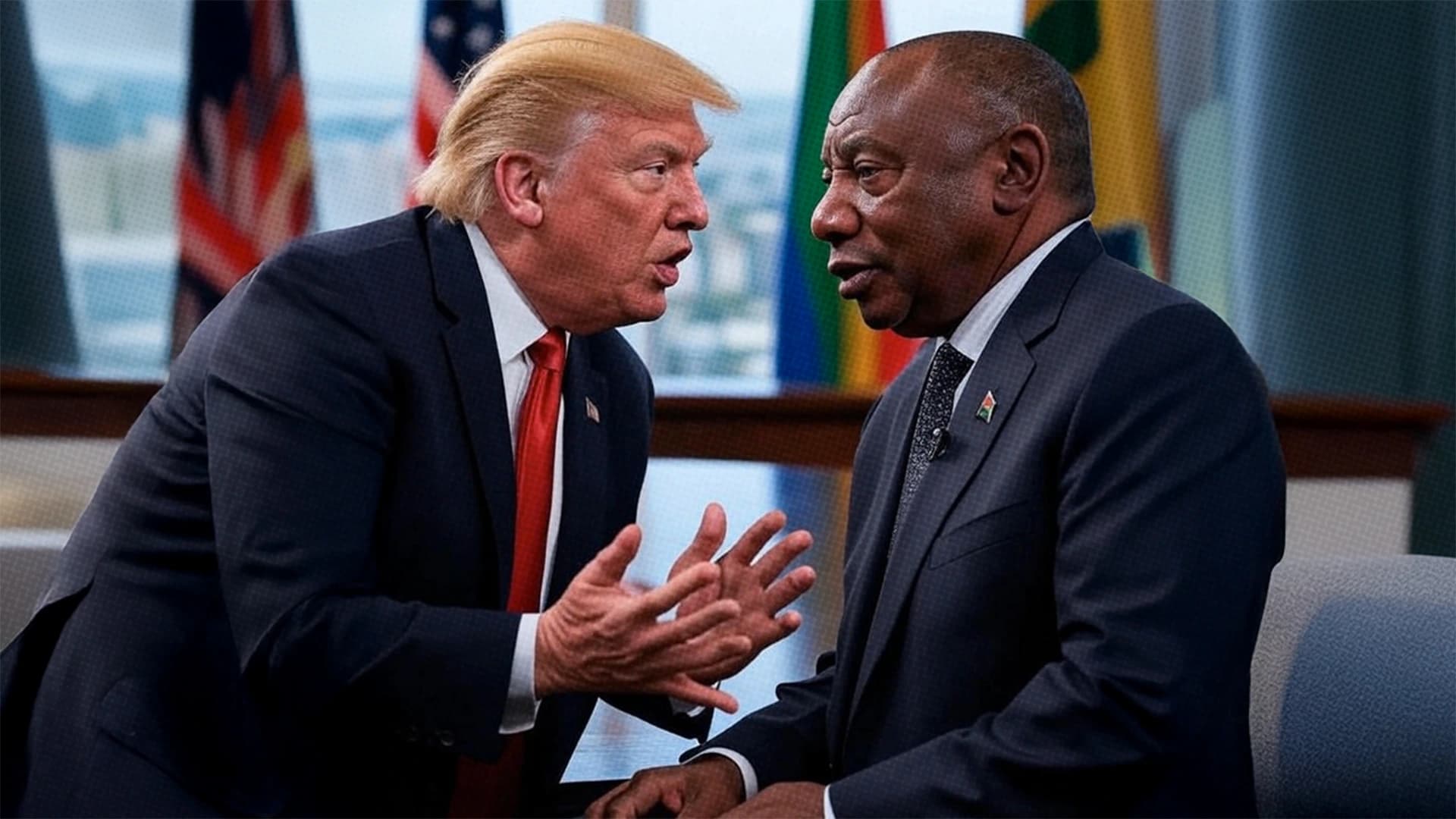
The United States (US) has accused South Africa’s government and security forces of unlawful killings, undermining property rights through land expropriation laws and tolerating rising antisemitism, in a report Pretoria has rejected as “inaccurate and deeply flawed.”
Human Rights ‘significantly worsened’
The US State Department’s 2024 Human Rights Report said the country’s human rights situation “significantly worsened” during the year, citing the 20 December signing of the Expropriation Bill as “a substantially worrying step towards land expropriation of Afrikaners and further abuses against racial minorities.”

State Department spokesperson Tammy Bruce, announcing the report on Tuesday 12 August, said it had been “restructured in a way that removes redundancy, increases report readability, and is responsive to the legislative mandates that underpin the report – rather than an expansive list of politically biased demands and assertions.”
The report cited “credible reports” of arbitrary or unlawful killings by police, including at least 40 suspects shot dead by April and six more killed in a September police operation in Durban. Watchdog groups also recorded deaths in custody from abuse and neglect, while the South African Human Rights Commission (SAHRC) noted severe police failings during the July 2021 riots, which left 337 people dead.
“Kill the Boer”-song, Expropriation and antisemitism
The report warned that extremist rhetoric, particularly the Economic Freedom Fighters’ (EFF) revival of the song “Kill the Boer,” had “incited violence” against Afrikaner farmers.
The report also criticised the Expropriation Act, which allows land seizure without compensation under certain conditions, as enabling the state to take ethnic minority Afrikaners’ agricultural property and potentially fuel violence against racially disfavoured landowners.
On antisemitism, it said South Africa recorded 125 incidents in 2024 – including assaults, vandalism and boycotts of Jewish-owned businesses – with more than 70% occurring after Hamas’s Oct. 7, 2023, attack on Israel.
It accused senior officials of amplifying anti-Zionist and antisemitic rhetoric, excluding Jewish community representatives from interfaith events for the first time since 1994, and tolerating protests where antisemitic slogans were shouted.
DIRCO response.
DIRCO ‘disappointed’
South Africa’s Department of International Relations and Cooperation (DIRCO) said it was “profoundly disappointed” by what it called an “a-contextual” and “fact-free” account. It objected to the inclusion of cases still before the courts as examples of extra-judicial killings and said police use-of-force incidents were mentioned “without acknowledging the robust processes in place” to assess whether due process was followed.
Media Statement
— DIRCO South Africa (@DIRCO_ZA) August 13, 2025
South Africa rejects inaccurate and deeply flawed account of Human Rights Practices.
More: https://t.co/XyhvDruPBp
DIRCO accused Washington of hypocrisy, contrasting the State Department’s criticism of the Expropriation Act with what it called the UN Human Rights Office’s recognition of the law as a critical step toward correcting racially skewed land ownership.
“It is ironic that a report from a nation that has exited the UN Human Rights Council … would seek to produce one side fact free reports without any due process or engagement,” DIRCO said, adding that US agencies such as ICE faced their own documented human rights concerns.
Amnesty International also criticised the State Department’s approach, saying on X it engaged in “very selective documentation” of abuses worldwide and failed to fully capture serious violations in some countries. While it has not yet disputed individual findings on South Africa, Amnesty International accused Washington of applying double standards and overlooking the abuses of US allies.


