


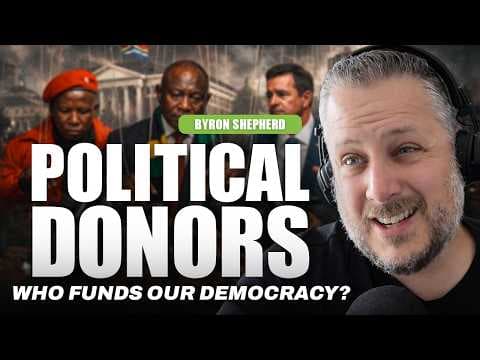
Since the Political Party Funding Act came into effect, South Africa’s political finance landscape has become more transparent, but also more controversial.

Public disclosures have revealed that millions of rand have flowed into opposition party coffers from prominent local business families, private individuals, and foundations with international links. The law sets annual donation caps, requires quarterly reporting, and offers certain tax incentives for declared contributions. On paper, it is a transparency reform. In practice, it has opened a national debate about who funds political movements — and why.
At the centre of the controversy is the question of foreign-linked funding and donor influence. While the Act permits certain forms of international support within legal boundaries, critics argue that large contributions — whether domestic or foreign — can create subtle pressure behind closed doors. Supporters counter that fundraising is a normal feature of any functioning democracy, and that disclosure requirements are precisely what prevent undue influence. The line between legitimate support and political leverage, however, remains politically charged.
The debate intensifies around claims that major donors may have influenced internal leadership dynamics within the Democratic Alliance. Although such allegations remain contested, they raise broader questions: how much sway do funders truly have in shaping party direction, candidate selection, or policy priorities? And should voters view large donations as a sign of confidence — or a potential risk to independence? As political competition sharpens ahead of future elections, the spotlight on money in politics is unlikely to fade.
Transparency may have improved, but public trust will depend on whether disclosure translates into genuine accountability.


