


The chairperson of the parliamentary committee on public service has called for an urgent, independent audit into the South African Police Service’s (SAPS) Crime Intelligence Division, citing concerns over “ghost employees” and pervasive payroll fraud.
Jan de Villiers, head of the Portfolio Committee on Public Service and Administration, submitted the formal request to Police Minister Senzo Mchunu on Thursday 3 July.
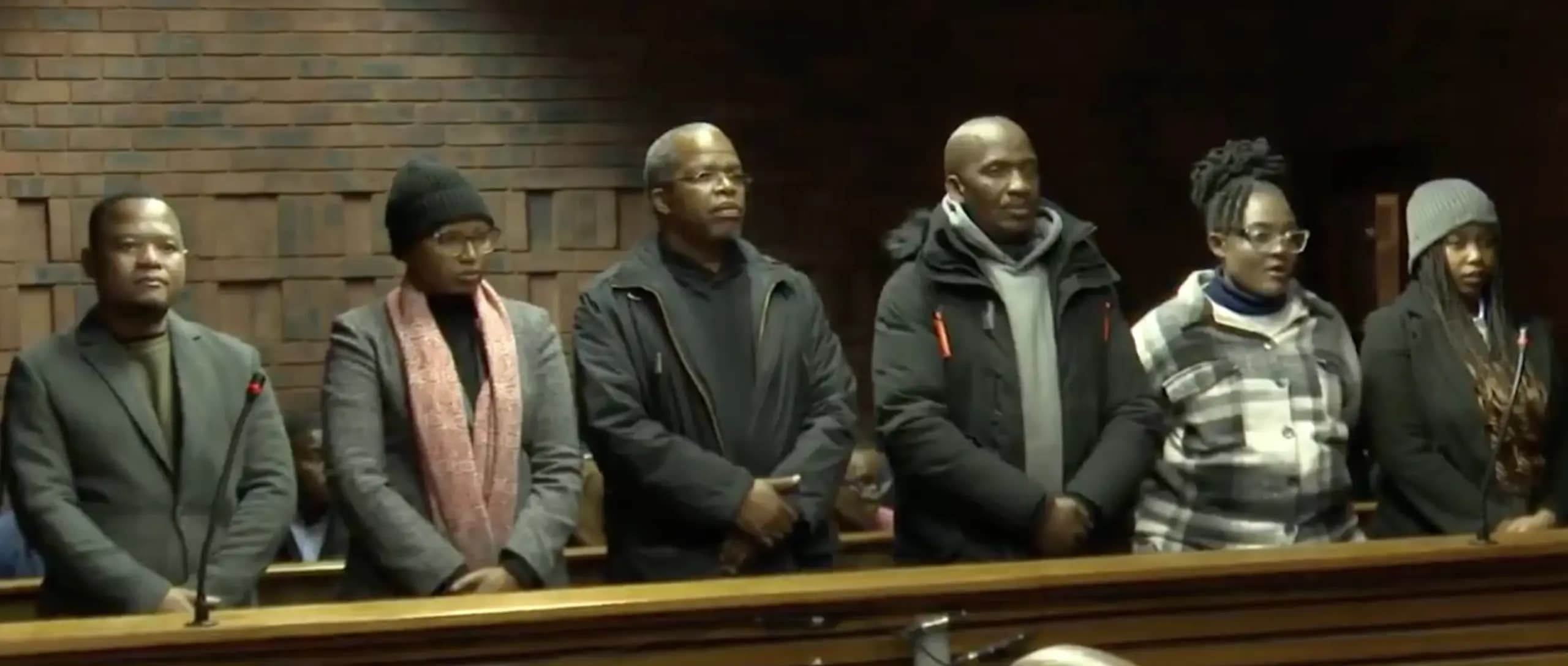
The move follows the arrest of seven senior officials in the division for corruption and fraud: Lt-Gen Dumisani Khumalo (Divisional Commissioner), Maj-Gen Philani Lushaba (Chief Financial Officer), Maj-Gen Josias Lekalakala (Gauteng Crime Intelligence Head), Maj-Gen Nosipho Madondo (Head of Analysis Centre), Maj-Gen Zwelithini Gabela (Technology Services), Brig Dineo Mokwele (Technical Systems) and Brig Phindile Ncube (Head of Vetting).
Integrity of Crime Intelligence
The arrests, which took place between June and July, relate to the appointment of an unqualified civilian to a senior post.
[WATCH] Head of SAPS Crime Intelligence Dumisani Khumalo appears in the Pretoria Magistrate's Court. Khumalo has been linked to an ongoing investigation into alleged abuse of intelligence slush funds and potential illegal appointments within the SAPS. #Newzroom405 pic.twitter.com/HIBqwNvhE8
— Newzroom Afrika (@Newzroom405) June 27, 2025
The arrests raised serious questions about the integrity of Crime Intelligence’s payroll systems, de Villiers said, with the possibility of irregular appointments, inflated headcounts and unvetted recruits being high.
Central to the concern is the Secret Services Account – a classified budget intended for covert operations and informant payments. Several of the arrested officials were custodians of the fund, which de Villiers warned is vulnerable to manipulation.
“It is reasonable to expect similar malpractice in payroll management,” he said.
Full audit in 90 days
The committee chair requested the National Treasury and Public Service Commission to coordinate a full audit within 90 days. The investigation should include a headcount verification against actual deployed personnel and a forensic review of payments made from the Secret Services Account.
The proposal aligns with ongoing efforts to root out so-called ghost employees — fictitious staff drawing salaries from the state – across departments.
In his budget speech in February, Finance Minister Enoch Godongwana announced an ongoing expenditure review of more than R300 billion in government spending, since 2013. The review uses a data-driven strategy to root out inefficiencies, duplication and waste, including ghost employees.
Said Gondongwana during that speech: “We found potential savings of R37.5 billion over time through improved oversight and operational changes through these reviews.”
During a September 2024 hearing, the Standing Committee on Public Accounts was briefed by the Special Investigating Unit (SIU) on the discovery of 1 277 ghost employees in the Passenger Rail Agency of South Africa’s (Prasa) system.
According to the SIU, Prasa had been losing about R20 million a month in fraudulent salaries. The majority of the agency’s ghost workers were reportedly former employees who had never been removed from the system.
Calculated collusion
This was not an error of omission. The Ziveze Project, which uncovered the fraud, suggested that payroll manipulation had become institutional practice.
On Thursday, de Villiers reiterated that it “takes sophisticated collusion to create and maintain these ghost-worker employees, who operate like organised criminal syndicates embedded in our government systems”.
Earlier this month, during a media briefing by governance cluster chairpersons in the National Assembly, de Villiers said that creating one ghost employee on the public payroll required the collusion of at least three officials.
The Democratic Alliance in April laid corruption charges against Human Settlements Minister Thembi Simelane for her alleged involvement in a scheme at Eskom that involved billing the power utility for work done by ghost employees.
The police ministry has not yet issued a formal response to de Villiers’ audit request.


