


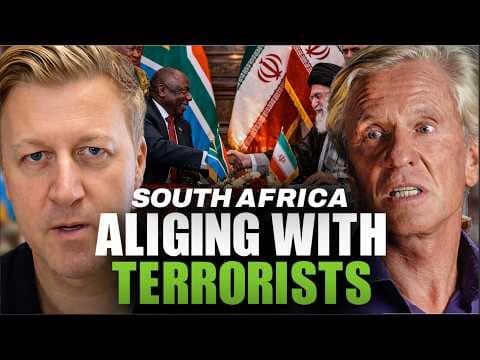
In this intense discussion, media personality Gareth Cliff and businessman Rob Hersov examine the growing controversy around whether the African National Congress has become entangled in a wider geopolitical network connected to Iran.

As tensions escalate across the Middle East, the conversation asks whether South Africa’s diplomatic posture is driven by strategic independence or by alliances that could carry serious political and economic consequences. The debate explores the country’s foreign policy choices and whether Pretoria’s stance on global conflicts is placing it on a collision course with Western allies.
The backdrop to this discussion is the rapidly escalating conflict involving Israel, Iran, and the United States. Joint military strikes by the United States and Israel on Iranian targets have dramatically intensified tensions in the region, with Iran responding through missile and drone attacks and threats to global shipping routes. Analysts warn that the fallout could stretch far beyond the Middle East, with global oil supply routes under pressure and energy markets reacting immediately to the instability.
For South Africa, the consequences could be more direct than many realise. Economists warn that rising oil prices, disrupted shipping routes, and geopolitical alignment risks could quickly translate into higher fuel costs, inflation pressure, and diplomatic strain with key trading partners. As Cliff and Hersov argue, the real question is not just about war in the Middle East.
It is about where South Africa positions itself in a rapidly shifting global order, and whether the country’s leadership understands the stakes of the alliances it chooses.


