



The latest court development offers breathing room to coastal traders. The deeper test for Ray Nkonyeni is whether public property, reliable infrastructure and accountable government can support lasting investment.
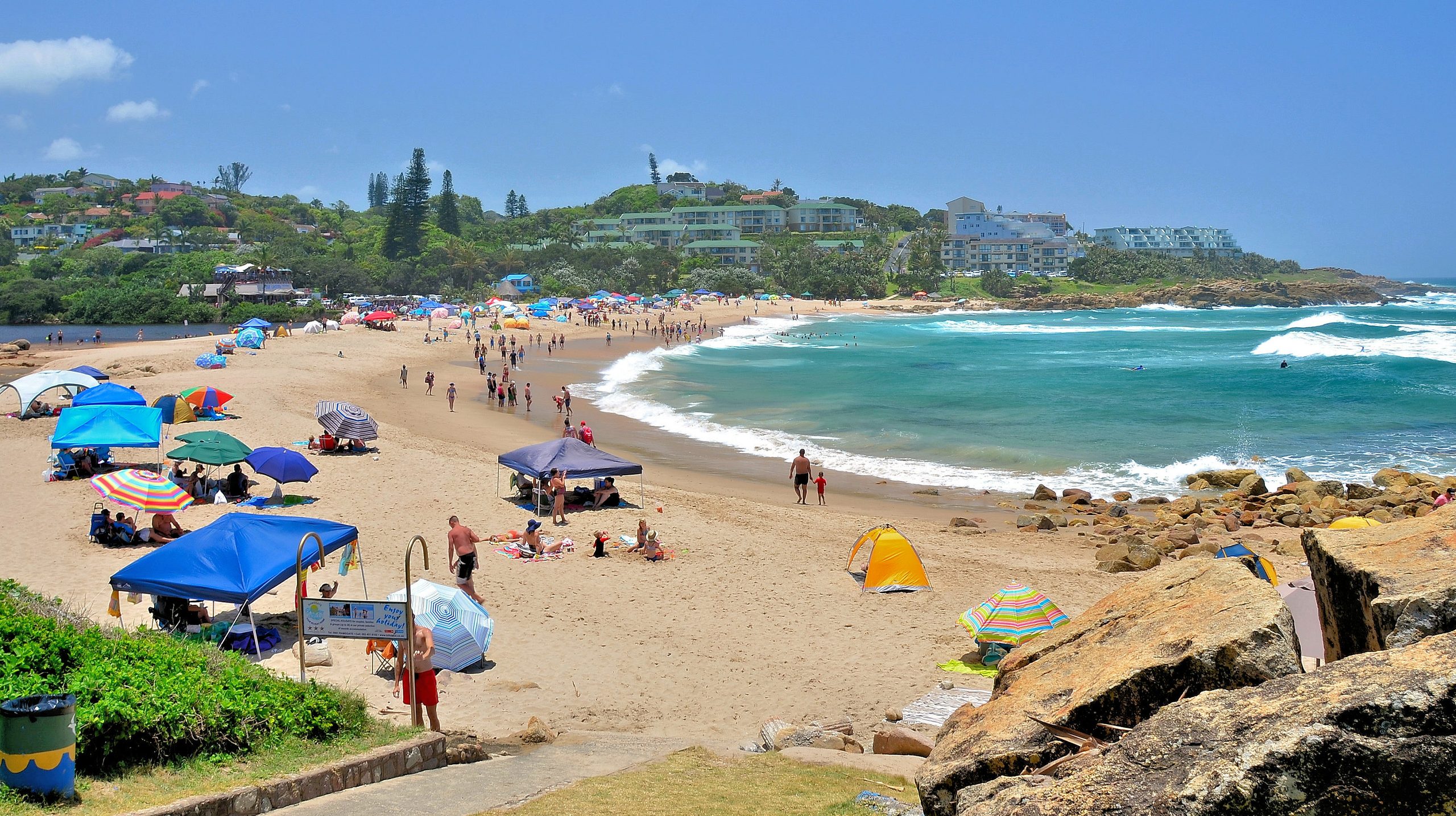
Six businesses on KwaZulu-Natal’s South Coast have been given room to proceed under new leases after a confrontation between Ray Nkonyeni Municipality and public works authorities. East Coast Radio reported the development on 29 October, offering a more hopeful picture than the cancelled lease handover earlier that month.
That relief should be understood precisely. The municipality says the court varied an interim restraint for six operating facilities; it did not decide the underlying dispute over property ownership or the cancellation of the management agreement. Its statement, published alongside the departments’ response, also says rental income must be preserved and accounted for pending resolution.
For residents, the distinction matters. A business needs a workable basis for trading. The public needs confidence that the people granting that right are entitled to do so, and that the income is properly managed. Those interests should reinforce one another.
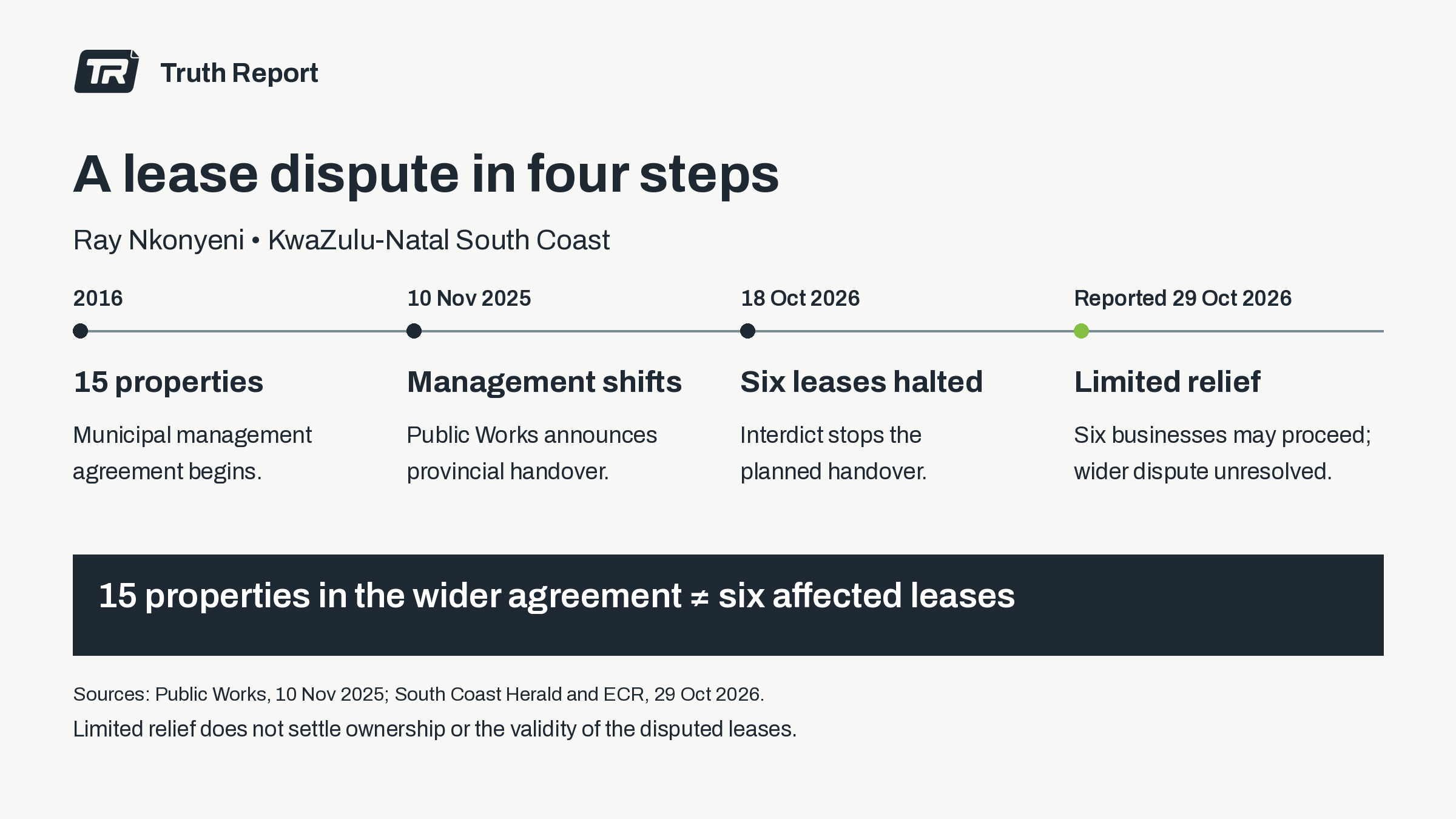
The wider arrangement covered 15 coastal properties. In its 10 November 2025 statement, national Public Works said it had ended the municipality’s 2016 management agreement with effect from 3 August 2025 and transferred management to the provincial department. It cited inconsistent leasing, ownership disputes and business complaints. These were the department’s stated reasons for intervention, not findings that resolve every contested issue.
The economic argument is straightforward. Someone deciding whether to repair premises, install equipment or retain staff must consider how long the business can remain there. Uncertain tenure can make expenditure harder to justify. A signed lease may improve that calculation, but it cannot by itself guarantee customers, finance or jobs.
The consequences are visible in the history of Mariners Seafood Restaurant at Marina Beach. The South Coast Herald reported on 5 October that the restaurant had remained closed after severe storm damage in September 2023. MEC Martin Meyer linked its failure to reopen to the lack of a long-term lease. That is a relevant explanation from the official promoting the intervention, rather than a complete accounting of every obstacle to rebuilding.
There is an important complication in the earlier record. In November 2024, the Mail & Guardian reported a national departmental spokesperson’s explanation that the department owned the land while the municipality owned the structures. The same report recorded the municipality’s position that unresolved ownership questions were holding up longer leases. It would therefore be misleading to treat ownership of every building as an uncontested fact.
Nor has the municipality’s public argument been confined to ownership. In November 2025, spokesperson Simon April challenged the handover process and argued that the spheres of government should engage before transferring management. That position does not establish that the municipality managed the properties well. It does show why a demand for investment cannot replace an answer to questions about authority and procedure.
The public works departments favour proceeding with the six businesses while the remaining issues go to mediation and, if necessary, arbitration. The municipality describes the relief as limited and maintains that the leases’ validity remains disputed. Both positions appear in the statements published on 29 October. The shared practical requirement is to protect trading while resolving the dispute, rather than ask tenants to absorb indefinite uncertainty.
Road access presents a separate constraint. At a September stakeholders’ meeting, the bridge contractor reported two outstanding payments from the provincial transport department. The department said payment would follow. The South Coast Herald also reported a dispute over termination of the R102 road contractor’s contract. These are distinct projects and disputes; they should not be collapsed into a single explanation of failure or treated as proof of today’s operating conditions.
For a prospective investor, however, the connection is practical: secure premises are more useful when workers, suppliers and customers can reach them. The relevant authorities should make it easy to distinguish completed work from promised dates, and settled invoices from disputed claims.
Leon Garbade, identified by the DA as its Ray Nkonyeni mayoral candidate in his September campaign speech, has made service failures central to his public case for change. Campaign criticism deserves scrutiny, but so do the standards by which any replacement administration would be judged.
A credible programme would begin with information residents can use: who is responsible for each property, what the lease permits, who collects the rent, what maintenance is required and when outstanding disputes should be resolved. Infrastructure reporting should be equally concrete, with named responsibilities and dates that distinguish commitments from completed work.
That is the accountability test beyond the immediate court contest. The South Coast needs businesses able to plan, workers able to rely on employment and residents able to see how public assets serve them. Relief for six traders is a useful step. Its lasting value will depend on what government does next.


