


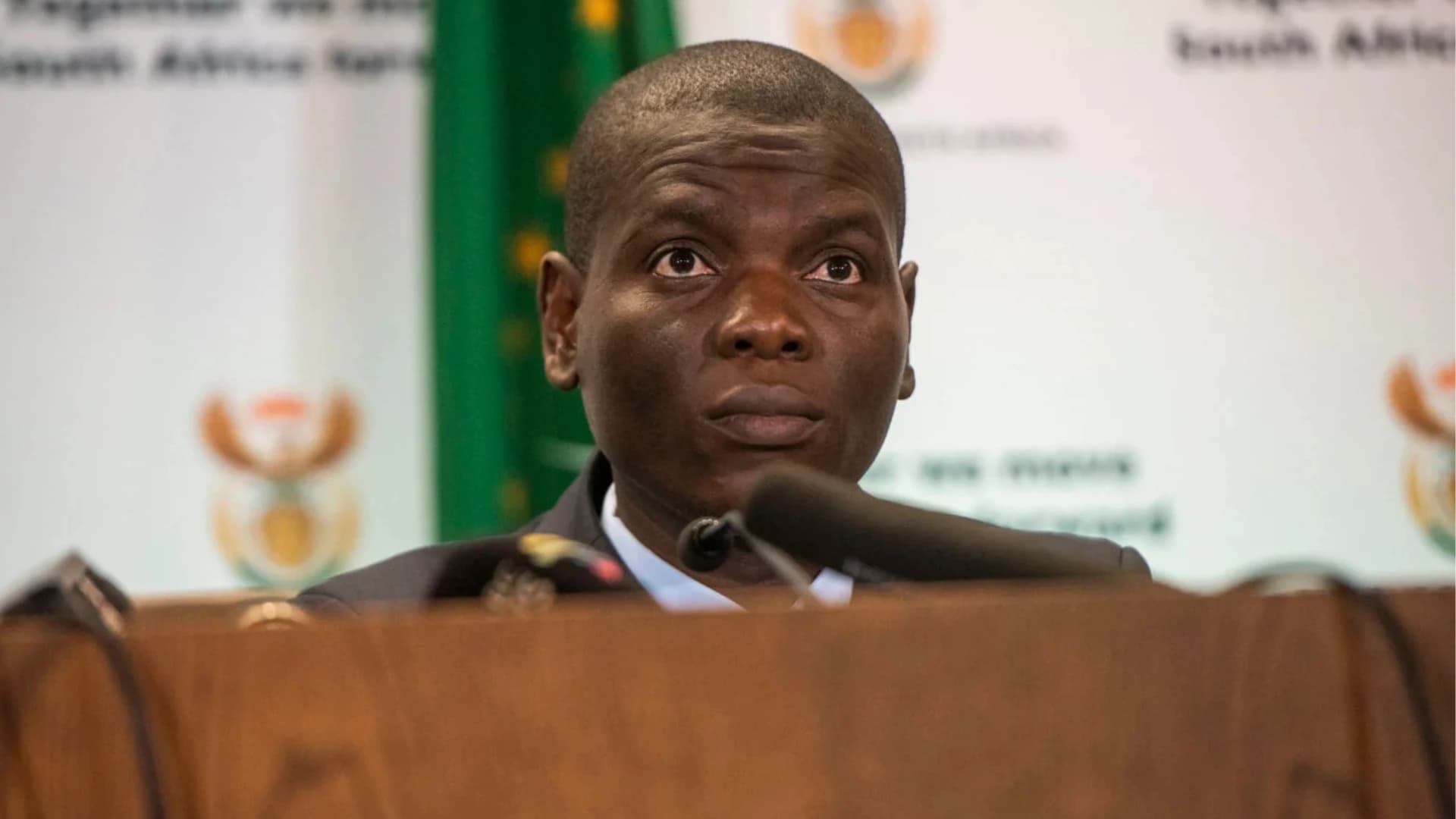
Justice Minister Ronald Lamola warned on Thursday 26 June that a fractured international order, driven by proxy conflicts and geopolitical rivalries, is eroding global peace and undermining the multilateral institutions meant to safeguard it.
Speaking at the G20 Sherpa Meeting in Sun City, North West Lamola said that “state rivalries are fuelling fragmentation, with economic decoupling, and proxy conflicts undermining global stability.”
States of fragility: A report
He cited the OECD’s States of Fragility 2025 report, which found that the number of armed conflicts is now at its highest level since the Cold War, and called for an urgent return to diplomacy grounded in international law.
“These international competition dynamics are exacerbating fragility in vulnerable regions while also weakening multilateral institutions that underpin the rules-based international order,” Lamola said.
The minister delivered the keynote address during a high-level session of the third G20 Sherpa Meeting, hosted under South Africa’s G20 Presidency.
International Relations and Cooperation Minister Ronald Lamola has sought to clarify the absence of the US at the third G20 Sherpa meeting currently underway in Sun City in the North West. https://t.co/TSxtBbQpYr
— SABC News (@SABCNews) June 26, 2025
His remarks focused heavily on the need for renewed global cooperation, the role of diplomacy in conflict resolution and South Africa’s vision of a peaceful and equitable world.
Lamola said the growing use of unilateral force, in defiance of United Nations norms, was accelerating global disorder. “Now we see violation of these fundamental principles of territorial sovereignty and political independence… as some stretch self-defence into speculation,” he said.
Citing last week’s US military strikes in Iran in an attempt to destroy that country’s nuclear facilities, he quoted UN Secretary-General António Guterres: “At this perilous hour, it is critical to avoid a spiral of chaos.”
Lamola added: “We understood the United Nation’s promise 80 years ago: collective security over coercion, the extinguishing of the law of the jungle.”
‘War offers only victims’
He described the international environment as one where “war offers no victors, only victims,” and said that South Africa’s anti-war stance is deeply rooted in its constitutional values and historical experience.
His comments came on the 70th anniversary of the 1955 Freedom Charter, which Lamola described as the foundation of South Africa’s constitutional and international outlook.
Quoting the charter’s call for peace and friendship, he said: “South Africa shall strive to maintain world peace and the settlement of all international disputes by negotiation – not war.”
He pointed to Sudan as an example of global diplomatic failure.
“Over 30 million people need life saving aid in Sudan, and more than 12 million have been displaced, Africa’s gravest displacement crisis in modern history,” Lamola said.
“I venture to say this is no longer a crisis, but a moral emergency that demands our collective consciousness and humanity.” Lamola also raised concerns over economic and technological pressures facing developing nations, including growing debt crises, climate change, cyber threats, and unequal access to data and digital infrastructure.
“The digital economy presents both unprecedented opportunities and deepening inequalities across the globe,” he said.
According to Lamola, without significant reform of the global governance architecture, “systemic challenges and highly probable risks will continue to undermine the rules-based international system, entrenching inequality, unravelling global solidarity and creating the potential for irreversible fragmentation.”
‘G20 can serve as catalyst for change’
Despite the bleak outlook, Lamola said the G20 can still serve as a catalyst for change.
“The G20 can lead in a moment of crisis. The G20 can help address the weaknesses of the multilateral system. The G20 can ensure that our collective humanity is not abandoned.”
He urged G20 nations to adopt diplomacy not just as a tool of foreign policy, but as a principle of governance.
“Transformational and peace-oriented diplomacy has become more relevant than ever before. Revitalising diplomacy and honest, transparent engagements are critical to mitigating these challenges and creating conditions for credibility, peace, stability and equitable shared economic prosperity.”


