


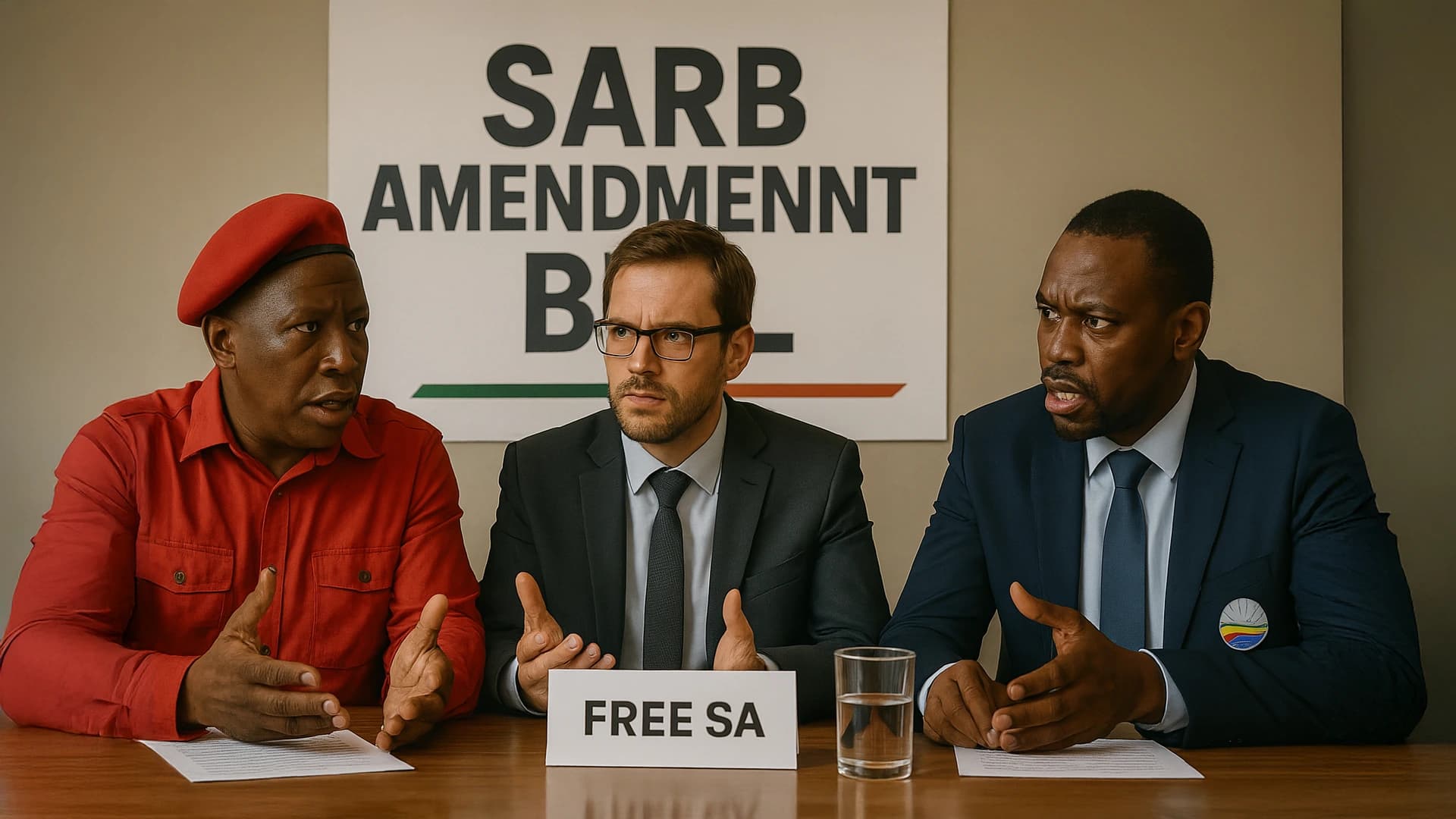
Advocacy group, Free SA, has opposed the South African Reserve Bank (SARB) Amendment Bill, warning that nationalising the central bank could destabilise the economy, erode institutional independence and damage international credibility.
The bill, introduced by Economic Freedom Fighters (EFF) leader Julius Malema in 2018, seeks to make the state the sole shareholder of the SARB and grant the Minister of Finance authority to appoint directors and auditors.
The SARB Amendment Bill: Key provisions and public debate
The bill does not change the SARB’s constitutional mandate to protect the rand’s value, Free SA argues, however, it threatens the bank’s independence, a critical factor in maintaining economic stability.
The group said on Monday 31 June that it had submitted its formal opposition to the bill to parliament.
Protect Our Independence: Say No to SARB Capture
— Free SA (@FreeSAorg) June 19, 2025
The Reserve Bank exists to protect your money — not to serve the ruling party.
Now government wants to take full control of the SARB through nationalisation and sweeping amendments like Bill B26‑2018. If they succeed, the rand… pic.twitter.com/3TGOVAVqrK
“An independent central bank is a cornerstone of any credible economic system,” said Free SA spokesperson Reuben Coetzer.
“Handing full control of the SARB to political authorities opens the door to fiscal dominance, inflationary pressure, and potentially disastrous economic mismanagement.”
Economic risks of politicising SARB: Look at Zimbabwe, Venezuela
Free SA’s submission to Parliament highlights several risks, including inflation spikes from politicised monetary policy, reduced oversight due to concentrated governance powers, potential conflicts with the constitutional requirement for SARB independence under section 224, and diminished investor confidence leading to capital outflows.
The group cites Zimbabwe and Venezuela as cautionary examples where loss of central bank independence triggered hyperinflation and currency collapse.
“Symbolic ownership should not come at the cost of real economic harm,” Coetzer said. “The SARB is one of South Africa’s most respected institutions. Undermining its independence, whether deliberately or by accident, will hurt ordinary South Africans most, especially the poor who suffer first and worst from inflation.”
The bill, currently under review by the Standing Committee on Finance, has sparked debate since its introduction. Public hearings were scheduled for Wednesday, following a call for submissions that closed Monday, according to parliamentary announcements.
Call for safeguarding SARB’s independence, economic stability
The EFF, led by Malema and Deputy President Floyd Shivambu, argues that nationalisation would align the SARB with public interests, noting that most central banks globally are state-owned. However, critics, including the Democratic Alliance (DA) and economists, warn of negative consequences.
The DA opposes the bill, stating it risks economic instability by threatening the SARB’s autonomy. Business Leadership South Africa and the Institute for Race Relations have also expressed concerns, citing potential damage to investor confidence and monetary policy credibility.
Free SA urged lawmakers to reject the bill and focus on reforms that enhance SARB transparency and accountability without compromising its independence. The group emphasized the need to protect the constitutional safeguards that have supported South Africa’s macroeconomic stability.


