


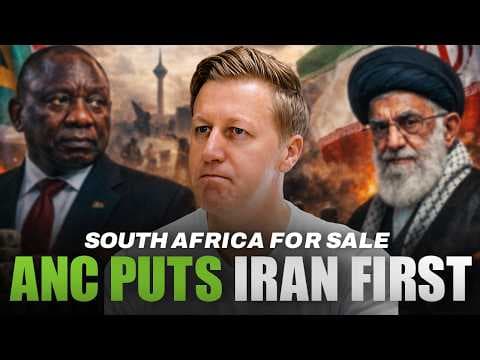
South Africa’s foreign policy is facing renewed scrutiny as questions mount over its positioning in a rapidly shifting global order. Is the ANC gambling the country’s access to AGOA trade benefits by straining relations with Washington?

Has Pretoria aligned itself too closely with regimes facing international isolation? And why does the government speak forcefully on some global conflicts, yet remain comparatively muted on allegations of internal repression in countries it considers strategic partners? These are not abstract diplomatic debates — they carry real economic and geopolitical consequences.
We unpack the growing tension between Pretoria and Washington, the controversy surrounding BRICS naval exercises, and the diplomatic ripple effects of South Africa’s case at the International Court of Justice. At the same time, allegations of foreign financial influence and ideological alignment add fuel to concerns about transparency and strategic clarity. Is South Africa pursuing a carefully calculated multi-aligned strategy — or drifting into positions that risk trade access, investor confidence, and diplomatic leverage?
This moment is bigger than Iran, the United States, or any single alliance. It is about governance, institutional integrity, and how a middle-income democracy balances sovereignty with economic realism. In a world where trade agreements, security cooperation, and geopolitical blocs are hardening, South Africa’s choices will shape its future prosperity and global credibility.
For citizens who care about accountability, economic stability, and the country’s long-term place in the world, this is a conversation that cannot be ignored.


