


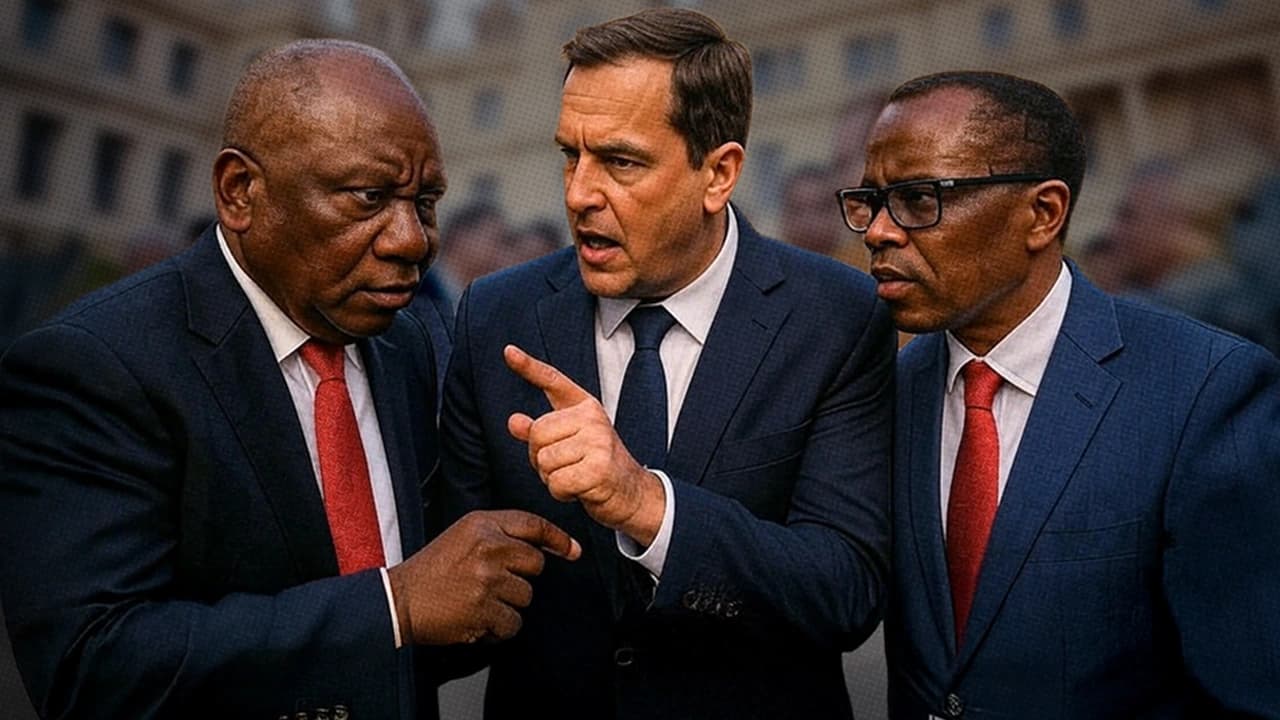
The Government of National Unity (GNU), formed in the wake of South Africa’s historic May 2024 general election, is showing increasing signs of strain.
For the first time since the dawn of democracy in 1994, the African National Congress (ANC) lost its parliamentary majority, slipping to 40.2%—a political earthquake that thrust the country into uncharted territory.
To avoid a legislative deadlock in the newly hung National Assembly, the ANC spearheaded the creation of the GNU, partnering with nine other parties, including the centrist Democratic Alliance (DA), the conservative Inkatha Freedom Party (IFP), and others across the political spectrum. While modelled on the spirit of post-apartheid reconciliation, this modern-day GNU is less idealistic and more transactional—a coalition born of political survival.
Yet, as Truth Report contributor Joe Emilio argues in his latest video analysis, the GNU is faltering under the weight of its contradictions. Far from ushering in an era of cooperation and renewal, the alliance has become a “directionless power-sharing agreement,” plagued by factionalism, ideological clashes, and bureaucratic inertia.

Public sentiment and political forecast
Public support for the GNU is lukewarm at best. Many South Africans view the formation as an elite pact, disconnected from the real needs of citizens. There’s growing concern that the GNU could implode under its own contradictions, or worse, erode slowly, leading to years of ineffective governance and missed opportunities for reform.


