


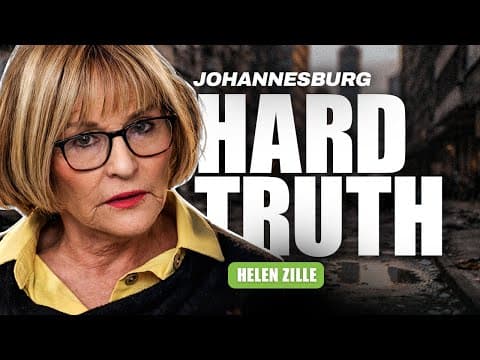
In this wide-ranging interview, Helen Zille examines the underlying causes of urban decay in South Africa, moving beyond slogans to focus on the practical realities of governance.

She points to failed local government, entrenched corruption, and weak accountability as central factors behind collapsing infrastructure and deteriorating public services. Rather than framing decline as inevitable, Zille argues that cities fail when leadership abandons basic administrative competence in favour of ideology and short-term political survival.
The discussion extends beyond government alone, addressing the social conditions that compound institutional failure. Substance abuse, broken family structures, and unrealistic political promises, she suggests, create an environment where communities struggle to recover even when resources are available. Zille stresses that responsibility cannot be outsourced entirely to the state; sustainable recovery requires clear rules, consistent enforcement, and citizens who demand results rather than rhetoric from those in power.
What distinguishes this conversation is its emphasis on honesty and open debate. Zille frames free speech and transparent political dialogue as prerequisites for reform, not luxuries. Without the ability to confront uncomfortable truths about governance and social responsibility, meaningful rebuilding becomes impossible.
For anyone concerned about South Africa’s future, this interview offers a grounded assessment of what it actually takes to restore a city from the ground up, and why avoiding hard conversations only accelerates decline.


