


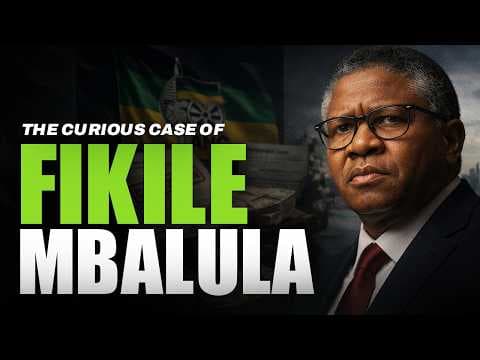
A political storm is intensifying in South Africa, and its impact is now reaching far beyond the country’s borders.

At the center of the controversy are allegations involving ANC Secretary General Fikile Mbalula, with claims ranging from a controversial overseas trip to questions around financial transactions and a police docket that did not result in prosecution. As details continue to surface, the situation is raising broader concerns about transparency, accountability, and the integrity of public office.
What began as a domestic political issue has now taken on international dimensions. The civil rights organization AfriForum has escalated the matter by calling for targeted sanctions under the Global Magnitsky Act. This move places the discussion within a global accountability framework, drawing comparisons to previous high-profile cases involving networks like the Gupta family network. Such developments raise critical questions about sovereignty, international pressure, and how South Africa navigates allegations of corruption on the world stage.
Beyond the individuals involved, the implications of this case are far reaching. It highlights the tension between domestic legal processes and international intervention, as well as the growing role of non-state actors in pursuing accountability. Whether these allegations lead to concrete consequences or fade into political noise remains to be seen.
What is clear, however, is that this moment has become a test of South Africa’s institutions, its commitment to transparency, and its standing in an increasingly interconnected global system.


