


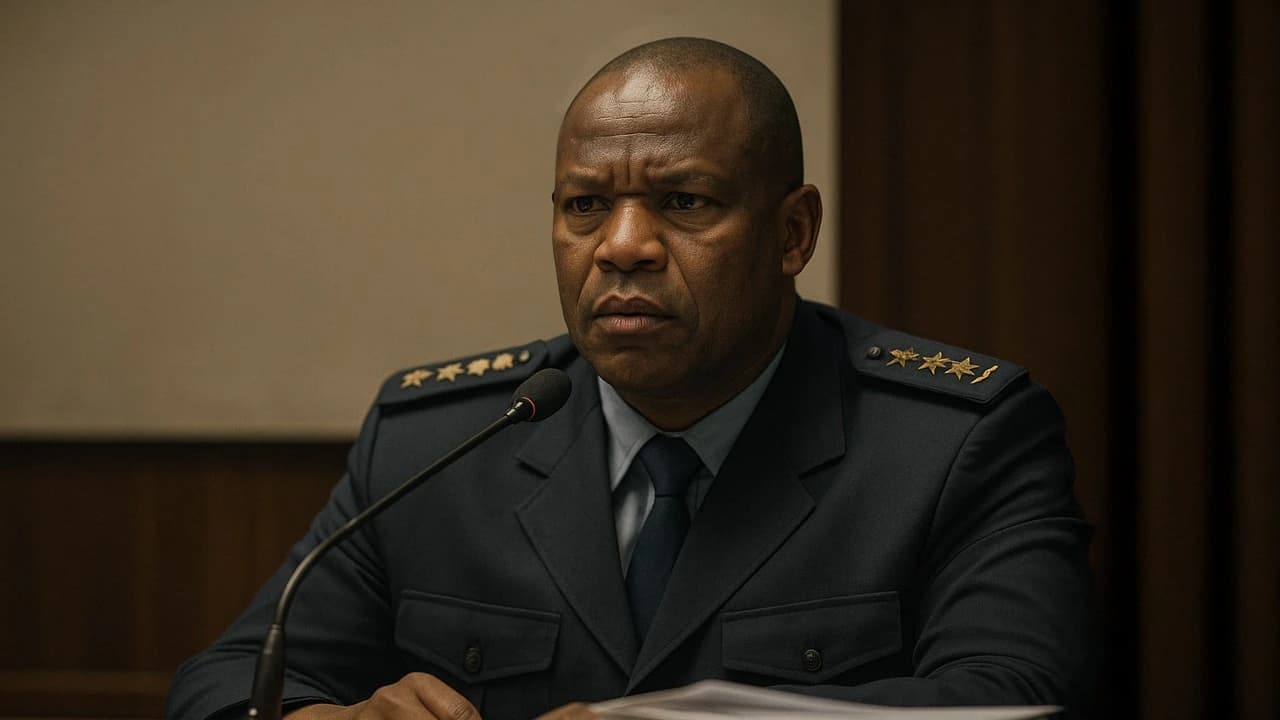
KwaZulu-Natal’s police chief, Lieutenant-General Nhlanhla Mkhwanazi, told the Madlanga Commission on Thursday that despite an order from former police minister Senzo Mchunu that the political killings task team (PKTT) be disbanded, he had not done so.
The task team continued with investigations after that instruction, said Mkhwanazi, despite reductions in personnel due to budget constraints.

Task team never disbanded
Mkhwanazi told the commission on Wednesday that Mchunu did not have the authority to disband the team, as this would be meddling in operational affairs. Mchunu’s ambit was policy, he said. He said repeated attempts to engage with Mchunu over the disbandment were ignored.
The disbanding of the task team is one of the key elements that the commission will be investigating.
Also on Wednesday, Mkhwanazi testified – as he had at a press briefing on 6 July that led to the establishing of the commission – that he believed Mchunu had ordered the disbandment because the team had come into possession of evidence that tied Mchunu to “criminal syndicates” involving the judiciary, senior police officers, politicians, and politically connected persons.
In his testimony on Thursday, Mkhwanazi reiterated that he had received no official communication about disbanding the team from his superiors. Neither had the KwaZulu-Natal director of public prosecutions (DPP), Elaine Harrison (formerly Zungu), or the National Prosecuting Authority (NPA).
Secure convictions ensured
Mkhwanazi was asked to read into the record correspondence from Harrison in which she asked if the task team had really been disbanded.
The task team and prosecutors worked closely on PKTT cases, ensuring that prosecution-driven investigations would take place, so that convictions can be secured.
In her letter, Harrison pointed out that local government elections were coming up in 2026, and there was the possible threat of political violence in the province. Any decision to withdraw a case of political killings needed to be motivated by a written report, she said.
The task team was established in 2018 on the authority of President Cyril Ramaphosa, and reported to an inter-ministerial committee. The team was formed in the wake of the Moerane Commission, which was established to investigate political violence and killings in KZN.
But the last time the inter-ministerial team was briefed was in 2023, according to Mkhwanazi, when Bheki Cele was still minister of police.
The 121 dockets removed, but copies backed-up
The task team was working on a number of case dockets, Mkhwanazi told the commission, before an order was given in March by since suspended deputy national commissioner for crime detection, Lieutenant General Shadrack Sibiya, allegedly on Mchunu’s orders, that 121 dockets should be removed from the team.
Mkhwanazi has previously alleged that those dockets were sitting on Sibiya’s desk in Pretoria, “gathering dust”. In some of those dockets were investigations that would implicate politicians, politically connected business people, and police officers in criminal syndicates, he said. In other dockets were cases of political killings that needed solving.
He told the commission on Thursday that the task team had, however, made copies of the dockets.
“As I indicated, the movement of the dockets to Pretoria did not involve me, but through my inquiries from the team, I was informed that they had scanned every single docket before handing it over, so that they keep record of the status of those dockets when they handed them over.”
Masemola said earlier this month that the dockets had been returned to the task team.
According to Mkhwanazi, they were audited when returned to the team, to check nothing was missing or altered.
Mkhwanazi’s testimony continues.


