


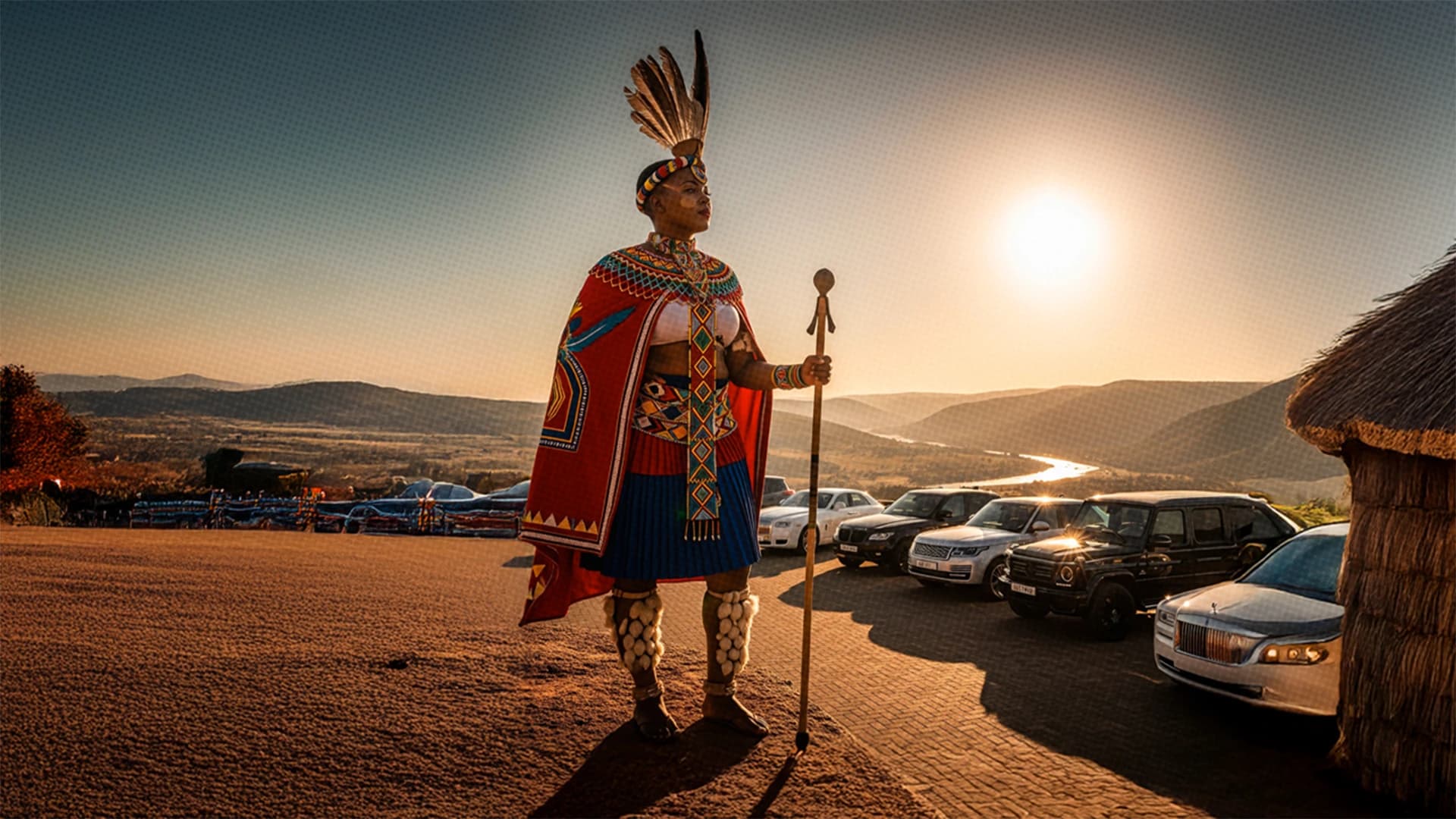
KwaZulu-Natal (KZN) Premier Thami Ntuli has gifted two 2025 Toyota Land Cruiser Prado SUVs to Queen Ntokozo kaMayisela and Queen Nomzamo kaMyeni, wives of Zulu King Misuzulu kaZwelithini.
The vehicles, presented at Mashobeni Royal Palace last month have raised the question about the use of taxpayer funds, especially as the Zulu Royal Household Trust (ZRHT) recently received a substantial budget increase.
However, Royal Spokesperson Prince Thulani Zulu said on Tuesday that the cars are not gifts but tools of the trade that the queens use during their work across the province. He said they had been purchased from the provincial budget allocated to the royal household.

High-cost vehicles at taxpayers’ expense
The donated vehicles are 2025 Toyota Land Cruiser Prado models, with pricing starting at R1 342 200 for the TX and reaching R1 500 200 for the VX-R according to Toyota’s 2025 pricing data.
Assuming the top-end model was chosen for the queens, the cost for the two SUVs could total approximately R3 million. These luxury vehicles, which come with leather seats, and an optional 9-service/90 000km service plan as well as a 3-year/100 000km warranty, represent significant expenditure funded by taxpayers.
The latest lavish gift follows a precedent set in 2021, when the KZN government, under then-Premier Sihle Zikalala, provided luxury vehicles to the queens of the late King Goodwill Zwelithini. While exact cost of the vehicles were not disclosed in the former premier’s announcement, Zikalala emphasised that each vehicle was priced below R800 000, in line with government policies for political office bearers.
Royal budget surges to R86 million
The KZN government has boosted the ZRHT’s budget for the 2025/2026 financial year to R86 million, a 9% increase from the previous year’s R77.5 million, as announced by Premier Ntuli. This hike, which significantly outpaces inflation, is intended to support King Misuzulu’s cultural duties, including events like the reed dance and palace maintenance.
The ZRHT, established to manage the royal household’s financial needs, was originally envisioned as a self-sustaining entity through revenue-generating projects like property development and commercial farming. Despite these ambitions, the trust remains heavily dependent on public funds. Zulu said the cars would be used by the queens during the course of their work.
“The cars are not gifts but are tools of trade. It’s not the first time. The queens travel all 11 districts interacting with matrons who are in charge of young girls. There are so many other women projects. The queens are entitled to working with women and children throughout the province,” Zulu said.
“The two wives are currently the ones who are culturally serving. The others will be allocated to districts once they are well positioned to their duties.
“The cars have always been bought from the Royal Household budget. The queens of the former king were also allocated vehicles to do the same. It’s not a gift. You may have missed it during the reign of King Zwelithini,” he said.
Vehicles recorded as provincial assets
A spokesperson for the office of KZN Premier Thami Ntuli said no additional funds beyond the approved 2025/26 appropriation for the Royal Household programme were sought or used to buy the vehicles.
“The procurement complied with the Public Finance Management Act and provincial supply chain management requirements, with value-for-money, lifecycle cost, safety, and serviceability considerations applied,” he said.
“The vehicles were allocated to support the Royal Household’s official programme – including cultural, ceremonial, and community engagements across KZN By strengthening the royal house, the people of KZN ensure the reliability, and the reach of the duties carried out by members of the Royal Household. These are tools of trade for official use, recorded as provincial assets,” the spokesperson said.
He added that the allocation followed an operational needs assessment that considered roles, geography, frequency of official engagements, and existing fleet availability.
“Initial provisioning prioritised immediate operational gaps; further support remains subject to ongoing needs analysis, availability within the existing fleet, and compliance with budget and supply chain prescripts,” he said.
Commenting on the matter Ntuli said: “Our responsibility is to ensure the Zulu Monarchy can fulfil its cultural and community mandate effectively and safely. These allocations are operational tools to support that mandate, procured within the existing budget and in full compliance with public finance laws.”


