


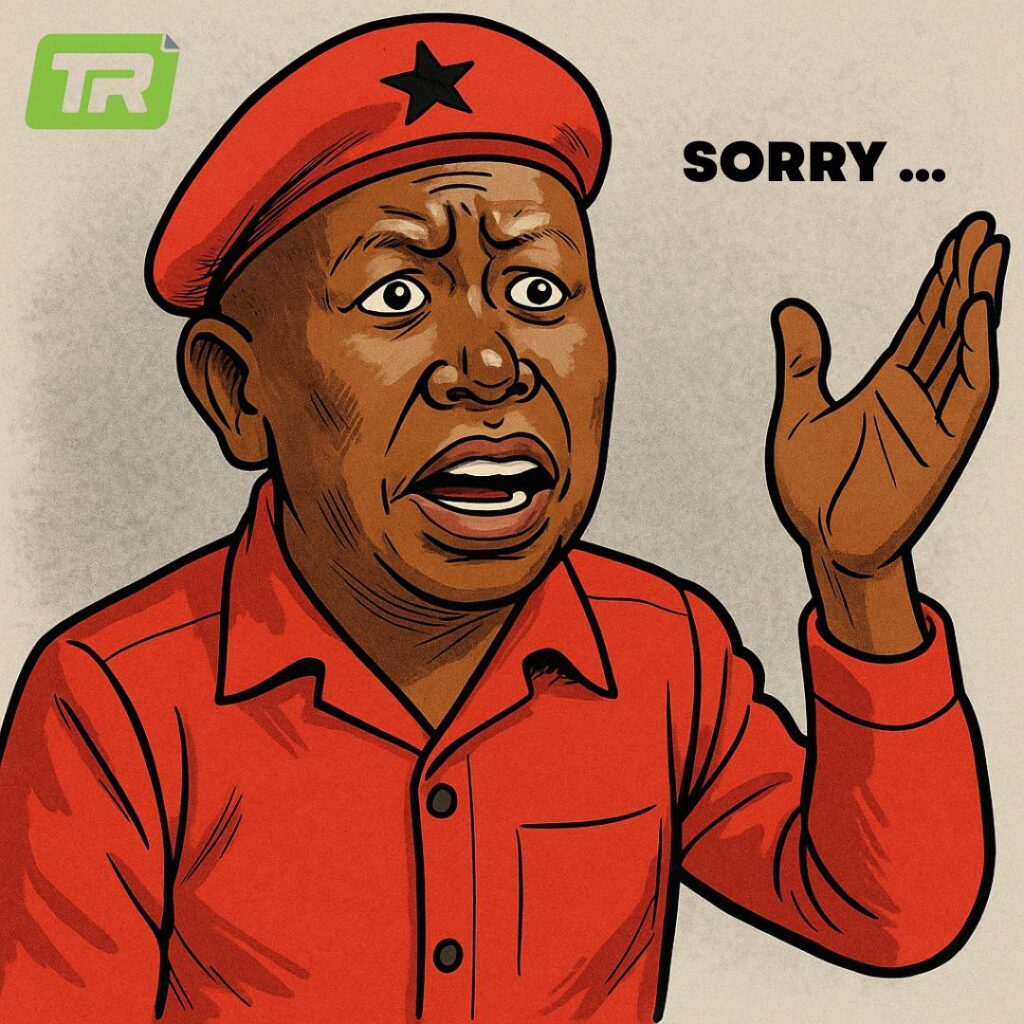
A Western Cape High Court ruling today has forced EFF leader Julius Malema to publicly apologise to Judge Keoagile Matojane—ending a legal challenge and reviving conversations about accountability and free speech in politics.
What’s the Backstory?
- Ethics Report Verdict
In 2021, South Africa’s Parliamentary Joint Committee on Ethics found that during a Judicial Service Commission (JSC) interview, Malema had acted improperly by questioning Judge Matojane about a matter in which he was involved. The committee concluded that Malema had breached the norms expected of an MP and JSC commissioner, and directed him to apologise formally by February 2022 [iol.com] - Legal Delay Tactics
Malema sought to delay this apology by taking the matter to the Western Cape High Court, claiming his remarks were protected by freedom of expression. He obtained an interdict that temporarily halted the implementation of the committee’s directive. - Final Ruling: No More Delays
Today (May 23, 2025), the High Court dismissed Malema’s challenge as “patently without merit,” describing it as a political dispute rather than a genuine constitutional matter. The court ruled that justice must take precedence over delay tactics and ordered Malema to apologise with costs awarded against him.
What’s He Apologising For?
Malema is required to apologise specifically to Judge Keoagile Matojane. This stems from comments Malema made during the JSC interviews for selecting a SARS commissioner—his criticism of the judge was judged to be out of line with parliamentary and judicial propriety.
Why This Matters
- Checks and Balances in Action
South Africa’s separation of powers rests on holding politicians to ethical standards. This ruling asserts that political expression has limits, especially when aimed at undermining judicial processes. - Media & Public Response
The ethics ruling first made noise back in 2021, but today’s legal defeat reinforces a pushback against delaying accountability through court manoeuvres. It also raises the stakes for surviving public and legal scrutiny. - A Bit of Context
Malema is no stranger to high-profile confrontations. This year alone he faced delays in a UK visa for a scheduled Cambridge speech—prompting an apology from the British High Commission, which admitted procedural failure on its part [africa.com]
What’s Next?
- Urgent Apology Ahead
Malema must now deliver the apology without further delay. The court could impose consequences if this order is ignored. - Possible Appeal?
The ruling makes it clear that further legal delay would likely fail. An appeal may only prolong the inevitable. - Political Overtones
Expect reactions from the EFF and Malema himself—likely framing the apology as an infringement on political speech. But the courts have drawn a firm line here.
Julius Malema’s legal tactics to avoid a mandated apology have reached their limit. Today’s High Court ruling isn’t just about one man—it’s a statement about political ethics, the rule of law, and the boundaries of commentary by public officials. Politicians can speak, but they must also be held accountable
TL;DR
Julius Malema must apologise to Judge Matojane and the JSC.
The court found his actions during a 2021 JSC interview were a conflict of interest and a breach of MP ethics.
His attempt to challenge the finding failed, with the court calling it a meritless political maneuver.
Malema’s responsibilities as an MP apply—regardless of setting.


