


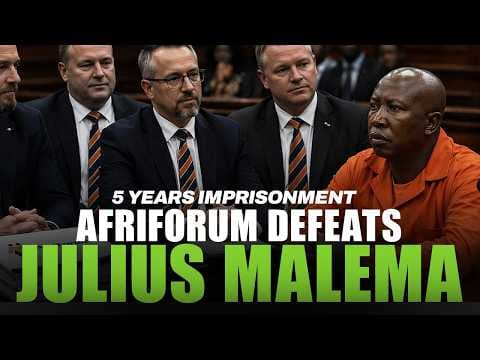
The sentencing of Julius Malema to five years in prison has sent shockwaves through South Africa, but the deeper story lies in how the case reached this point.

What began as a controversial firearm incident evolved into a broader test of accountability, raising questions about why action was delayed for so long. Many observers point to the role of AfriForum in pushing the matter forward, while concerns have been raised about hesitation within the National Prosecuting Authority.
The legal battle is far from over, with the possibility of an appeal set to shape what happens next. A key question is whether Malema could serve time while the appeal process unfolds or remain free until a final outcome is reached. This phase will test not only the legal system’s consistency but also public confidence in how justice is applied in high profile cases. For many South Africans, the issue is no longer just about guilt or innocence, but about whether the system acts decisively without external pressure.
Beyond the courtroom, the political implications are significant for the Economic Freedom Fighters and the broader electoral landscape heading toward 2029. The case could influence voter sentiment, party dynamics, and the tone of political discourse in the years ahead.
Whether this moment signals a move toward greater accountability or deepens existing divisions remains uncertain, but it has undeniably shifted the national conversation about power, justice, and the future direction of South Africa.


