


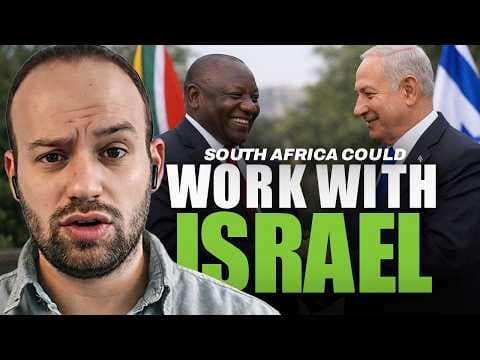
In this hard-hitting breakdown, Matthew Cohen unpacks how South Africa’s foreign policy choices may be quietly undermining economic growth and limiting access to global opportunities.

As tensions rise with key partners like the United States, questions are being raised about whether current diplomatic positions are costing the country investment, trade advantages, and long-term job creation. The discussion highlights how geopolitical alignment is no longer just symbolic — it has direct consequences for economic performance and global competitiveness.
A key focus of the conversation is the potential cost of missed partnerships, particularly in areas like technology, water innovation, and infrastructure development. Israel, for example, is often cited for its advanced solutions in water management and agri-tech — sectors that could significantly benefit South Africa. Critics argue that ideological positioning may be closing doors to practical collaboration, raising concerns about whether policy decisions are being guided by economic necessity or political alignment.
Ultimately, the debate comes down to a central question: is South Africa prioritizing ideology over economic survival? Cohen frames this not just as a policy critique, but as a broader warning about the country’s direction. A more strategic, opportunity-driven approach could unlock growth, strengthen international relationships, and create jobs.
For voters and policymakers alike, this serves as a wake-up call to reassess the balance between principle, pragmatism, and the urgent need for economic progress.


