


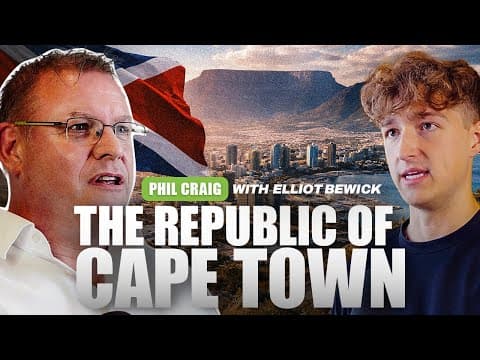
In this no-nonsense sit-down, Phil Craig and Eliot Bewick tackle the Cape Independence debate by confronting the history and constitutional realities many prefer to ignore.

The discussion traces how the idea evolved from quiet frustration into a structured political argument, grounded not in slogans but in law, precedent, and democratic principle. Rather than framing independence as rebellion, the conversation places it within South Africa’s own constitutional architecture and the right of communities to self-determination.
The debate digs into the legal pathway critics rarely engage with: the possibility of a referendum, the role of provincial mandates, and what would be required for such a process to be legitimate. Craig and Bewick challenge the assumption that national authority automatically overrides regional democratic will, arguing that dismissing the question without testing it at the ballot box is itself anti-democratic. Rising crime, governance failure, and economic decline form the backdrop, but the core issue remains political consent.
Ultimately, this conversation asks a question that unsettles the status quo: what happens if the Cape says “enough”? Not as an emotional outburst, but as a reasoned, lawful decision by voters.
Whether one supports or opposes independence, the debate forces an honest confrontation with facts, rights, and consequences, making it an argument critics can no longer afford to avoid in public.


