


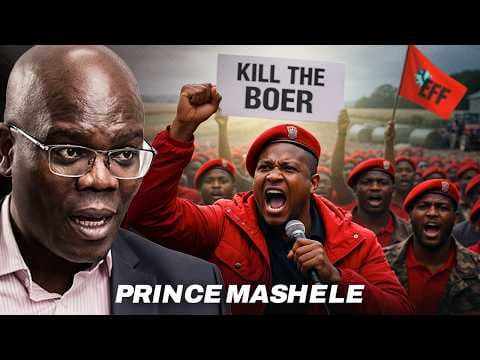
This discussion challenges dominant media narratives by questioning whether racial division in South Africa is as pervasive as often portrayed, or whether it is amplified for political gain.

Panelists argue that fear and identity politics have become powerful tools, used by leaders to mobilize support while distracting from deeper structural issues. Figures like Julius Malema are highlighted as influential voices in shaping public discourse, with debate over whether their rhetoric unites or further divides an already complex society.
At the same time, the conversation turns a critical eye toward the governance record of the African National Congress, pointing to corruption, mismanagement, and policy failures that have contributed to the country’s economic strain. Rather than focusing solely on social tensions, the panel emphasizes the everyday realities facing citizens—rising unemployment, failing infrastructure, and a slowing economy. The argument presented is that these material challenges, more than anything else, are driving public frustration and eroding trust in leadership.
Looking ahead, the discussion outlines stark scenarios for the next five years, ranging from worsening instability and potential unrest to the possibility of a political reset that could reshape the country’s future. Whether through electoral shifts, reform, or deeper systemic change, the path forward remains uncertain.
What is clear, however, is that questions of accountability, governance, and economic direction will play a decisive role in determining where South Africa stands in the years to come.


