


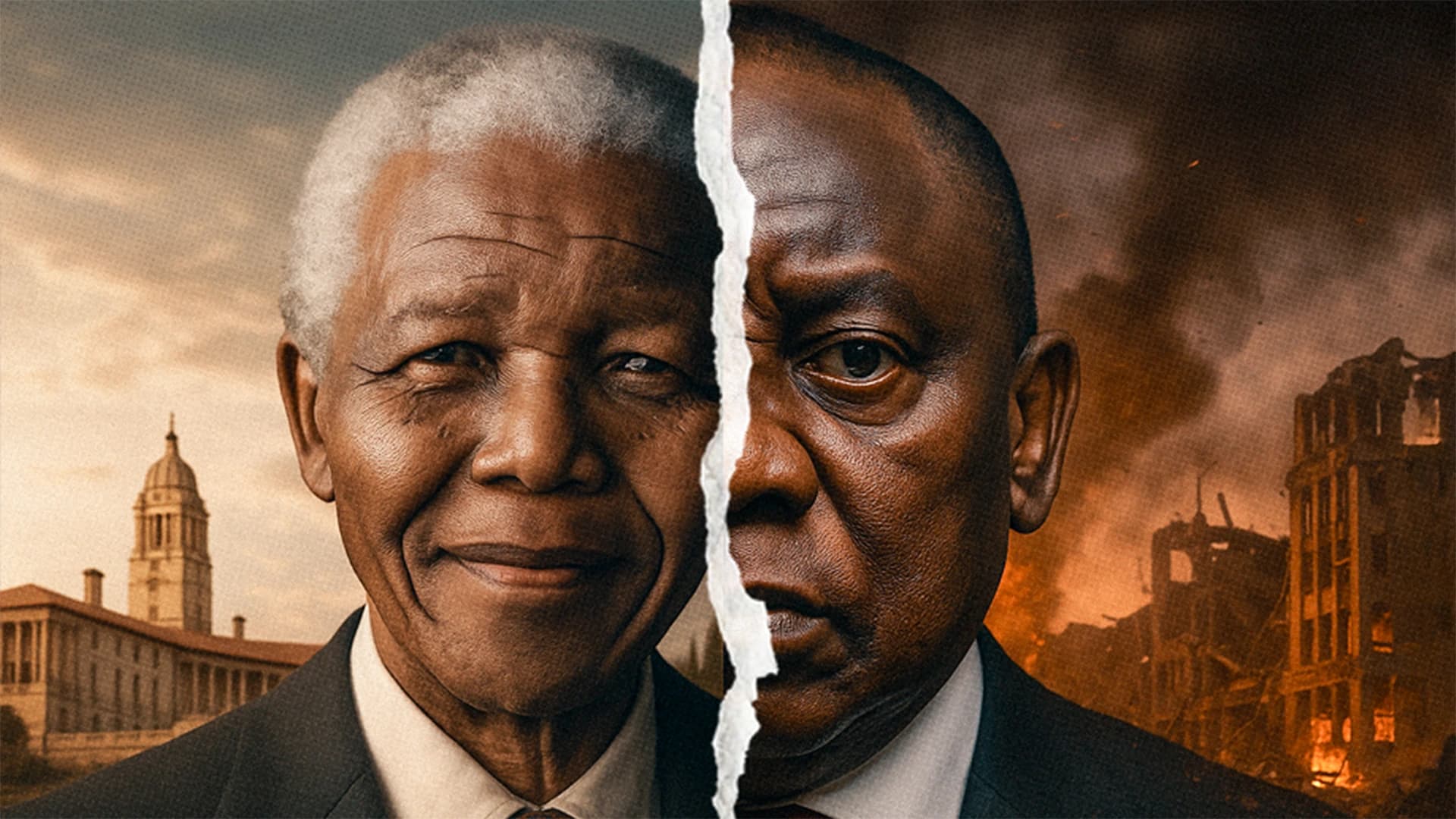
President Cyril Ramaphosa last Tuesday again defended South Africa’s foreign relations with Iran and Russia, portraying Pretoria as an increasingly influential player in global affairs and capable of being a conduit in international conflicts, even as ties with the United States remain strained because of ideological differences and trade disputes.
Speaking during a Q&A-session in the National Assembly (NA), Ramaphosa painted himself and South Africa as an international mediator, particularly in the ongoing Russia-Ukraine war, saying world leaders have turned to him to relay messages to Russian President Vladimir Putin.
“[O]ur standing as a country has been greatly enhanced, much as others say, our standing has been dashed,” Ramaphosa said. “It has actually been greatly enhanced, as many countries want to talk to us and see how best we can get involved in settling the variety of conflicts around the world.”

Historic Pretoria approach
This approach, rooted in Pretoria’s historical ties to nations like Russia, which supported the anti-apartheid struggle, allows South Africa to engage with parties shunned by others, Ramaphosa said.
Ramaphosa’s remarks come at a time when South Africa’s stated “non-aligned” foreign policy in certain conflicts, but deep alignment with Hamas controlled Gaza in the Israel-Hamas war, has drawn scrutiny from the United States and the ire of President Donald Trump.
Earlier this year, the Trump administration imposed 30% reciprocal tariffs on South Africa, along with tariffs on numerous other countries, which he said would prevent the United States from being “ripped off” by its trading partners.
Timing of Maphwanya visit to Iran
On Iran, Ramaphosa addressed controversy surrounding a recent visit by South African National Defence Force (SANDF) Chief General Rudzani Maphwanya to Tehran, where the general toured an elite military unit and made statements that sparked domestic and international backlash.
The visit, which occurred in August, was criticised for its timing amid heightened Middle East tensions, including Israel’s conflicts with Iran-backed groups.
Ramaphosa told the NA that South Africa has “no military operations with Iran,” describing the Islamic Republic as a fellow BRICS member and sovereign state. He said that Iran participated in a virtual BRICS summit on Monday, alongside nations like China, India, Ethiopia, Egypt, and Brazil.
‘Just bad timing’
“The general went to Iran on a pre-determined visit, which was planned…almost two years ago,” Ramaphosa said. “I had a long discussion with him, and we both agreed that the timing could have been managed differently.”
Ramaphosa said the general’s comments in Iran reflected longstanding bilateral ties but stressed they should not impact relations with other countries.
“What he said in Iran really was an expression of the continued relations that have existed between our two countries,” he said.
“And in the end, the relations we have have no impact whatsoever, and should have no impact with our relations with other countries.”
Opposition parties, including the Democratic Alliance (DA), have rejected Ramaphosa’s handling of the issue, labeling the general’s actions as insubordination and calling for him to be court-marshalled.
‘Don’t condemn, dialogue instead’
Shifting to Russia, Ramaphosa recounted how South Africa was initially “lambasted” for maintaining ties with Moscow during its invasion of Ukraine, which began in 2022.
Pretoria has abstained from several United Nations votes condemning Russia and advocated for dialogue over isolation.
However, Ramaphosa on Tuesday claimed a reversal in attitudes, with numerous world leaders now approaching South Africa to facilitate communications with Putin.
“There was a time when we were lambasted for even having any relationship with Russia, as it was involved in a war with Ukraine,” Ramaphosa said. “And now of late, nearly everyone comes to us and says, Could you kindly impart a message to President Putin?”
He cited a personal exchange with U.S. President Joe Biden during a White House visit, where Biden acknowledged Russia’s historical support for South Africa’s anti-apartheid fight and requested a message be relayed to Putin.
SA a neutral peace-broke?
More recently, Ramaphosa has engaged directly with Putin on the Ukraine crisis and hosted Ukrainian President Volodymyr Zelenskiy in April, trying to position South Africa as a neutral broker in peace efforts.
European leaders have also discussed Russia-Ukraine peace with Ramaphosa.
Said Ramaphosa: “These are largely countries that had decided to shun Russia… and we’ve often said, do continue engaging with Russia.”
“And now many of them are then calling us and saying, ‘can you please pass on this message to President Putin about the Ukrainian war so that we can find a settlement’.”
Ramaphosa insisted South Africa’s engagements do not compromise its principles, as peaceful resolutions were being sought.
“Our engagement with them does not result in the abandonment of our own principles…and they deal with us with great respect.”
Tariffs threatens exports
Turning to the United States, Ramaphosa addressed the economic fallout from the recently implemented U.S. 30% reciprocal tariffs, which threaten South Africa’s exports.
“Like many other countries, even around the world, our own country is facing the prospect of significantly higher tariffs to the exports that we make to the United States,” Ramaphosa said.
He detailed ongoing diplomatic efforts, with South African representatives in New York and Washington engaging U.S. administration officials, legislators, and business leaders ahead of formal negotiations.
“The Department of Trade, Industry and competition have sent representatives who are currently in the United States,” he said.


