


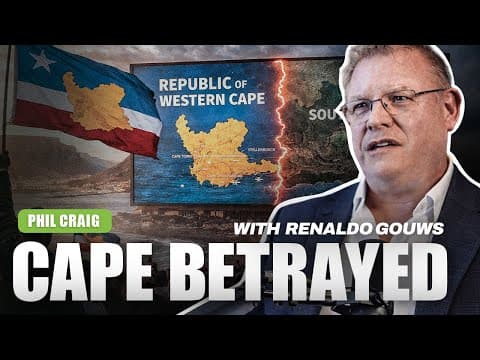
In this hard-hitting conversation, Phil Craig lays out why the Western Cape remains politically constrained inside a unitary system that leaves little room for real self-determination.

He points to spiralling crime, failed policing, and rising murder rates as symptoms of a deeper structural problem. Despite repeated calls from voters for change, local priorities are routinely overridden by national authority, leaving provinces unable to govern in line with the will of their own communities.
The discussion moves beyond frustration and into constitutional reality. Craig explains how blocked referendums, stalled legislative processes, and ignored public mandates reveal a system designed to centralise power rather than distribute it. He argues that this is not about party politics or ideology, but about whether democratic choices made at a regional level are respected at all. When voters are consistently overruled, the legitimacy of the system itself comes into question.
From there, the conversation explores autonomy, federalism, and even independence as serious policy discussions rather than fringe ideas. Drawing on international law and global precedents, Craig frames self-determination as a lawful and democratic response to systemic failure.
For anyone concerned with freedom, effective governance, and honest political debate in South Africa, this conversation challenges long-held assumptions and forces a reassessment of what real democracy should look like.


