


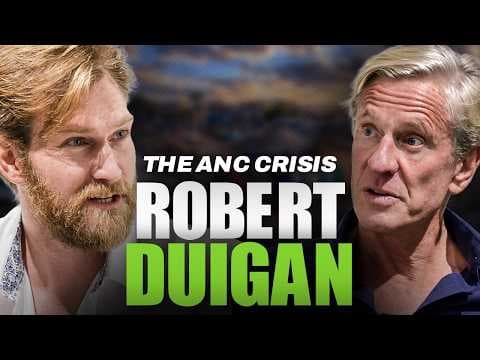
South Africa’s political trajectory may not be what many assume, and this hard-hitting conversation between Robert Duigan and Rob Hersov challenges dominant narratives head-on.

The discussion explores what truly drives voting behavior, arguing that for many citizens, decisions are shaped less by policy and more by identity, history, and lived experience. This reality, they suggest, helps explain why political power remains relatively stable despite widespread dissatisfaction and ongoing governance failures.
A central theme is how power is maintained within the system. The conversation examines internal party dynamics, the role of elites, and the persistence of corruption, all of which contribute to a cycle where reform efforts struggle to gain traction. Economic risks are also highlighted, with concerns about investment, policy uncertainty, and long-term stability. According to the discussion, these structural challenges make meaningful change difficult, reinforcing a sense that the system is resistant to transformation even when public frustration is high.
The interview also ventures into more controversial territory, including the growing debate around Cape Independence. While not universally accepted, the idea is presented as a response to perceived governance failures and regional disparities. This raises broader questions about unity, decentralization, and the future political structure of the country.
Ultimately, the conversation offers a stark but thought-provoking perspective on South Africa’s direction, urging viewers to look beyond slogans and engage with the deeper forces shaping the nation’s future.


