


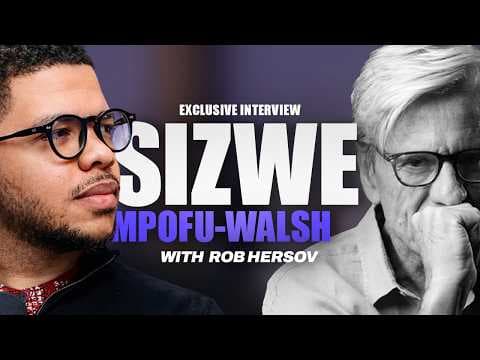
In this explosive conversation, the comforting “green shoots” narrative is stripped away and replaced with a far more uncomfortable diagnosis: stagnation masked as recovery.

South Africa’s economic drift, fragile coalition politics, and persistent governance failures demand more than optimistic press conferences. From the ANC’s deepening credibility crisis to the DA’s high-risk coalition maneuvering in major metros, the political centre appears increasingly unstable. President Ramaphosa’s long-promised “new dawn” now competes with declining mining output, weak growth forecasts, and structural unemployment that refuses to budge. This is not partisan theatre — it is a sober look at systemic underperformance across the board.
The discussion confronts questions many avoid. Is the Government of National Unity already buckling under competing agendas? Could Helen Zille’s strategic influence reshape Johannesburg’s political balance — or deepen factional tensions? Has corporate South Africa quietly prioritised self-preservation over national reform? Across parties, is there a genuine leadership vacuum — a shortage not of personalities, but of coherent vision and execution? And would a streamlined, technocratic “200-people” parliamentary model fix governance inefficiencies — or simply centralise power without solving accountability failures?
Beyond domestic politics lies foreign policy uncertainty: is South Africa pursuing principled non-alignment, or drifting without strategic clarity? In a volatile global economy, ambiguity carries real costs. The conversation ultimately asks whether the country can reset — economically, politically, and morally, before stagnation hardens into decline.
If South Africa is to reverse course, it will require disciplined leadership, institutional reform, policy coherence, and a renewed commitment to growth over rhetoric. For anyone serious about the country’s future, this is not just a debate, it is a reckoning.


