


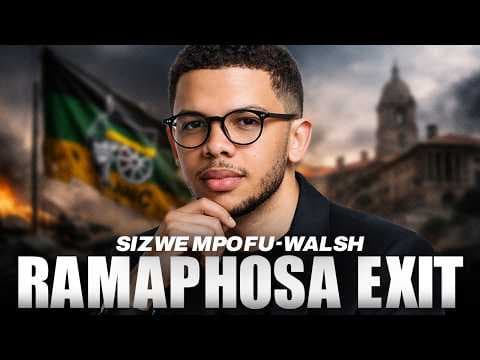
South Africa’s governing party may be approaching one of its most significant internal turning points in years.

Growing pressure around Cyril Ramaphosa has intensified debate within the African National Congress about leadership, succession, and the direction of the party ahead of future elections. If Ramaphosa were to step down as party leader, it could trigger a major contest within the ANC as factions compete to shape the party’s next phase and determine who will lead the country’s dominant political movement.
The discussion also explores the shifting power dynamics inside the party and the possibility that influential figures could emerge as contenders for national leadership. Some analysts have even speculated about whether prominent business leaders such as Patrice Motsepe could play a larger role in South Africa’s political future if the balance of power inside the ANC begins to shift. These debates reflect broader uncertainty about how the ruling party will respond to declining electoral support, internal factional battles, and growing public frustration over governance and economic performance.
At the same time, opposition parties are closely watching the situation as they look for opportunities to gain ground in key urban areas. The Democratic Alliance in particular is seen by some analysts as potentially strengthening its position in major metros such as Johannesburg if voter dissatisfaction with the ruling party continues to grow.
As political narratives around economic recovery and “green shoots” face increasing skepticism, the coming leadership battles inside the ANC could play a decisive role in shaping South Africa’s political landscape for the next decade.


