


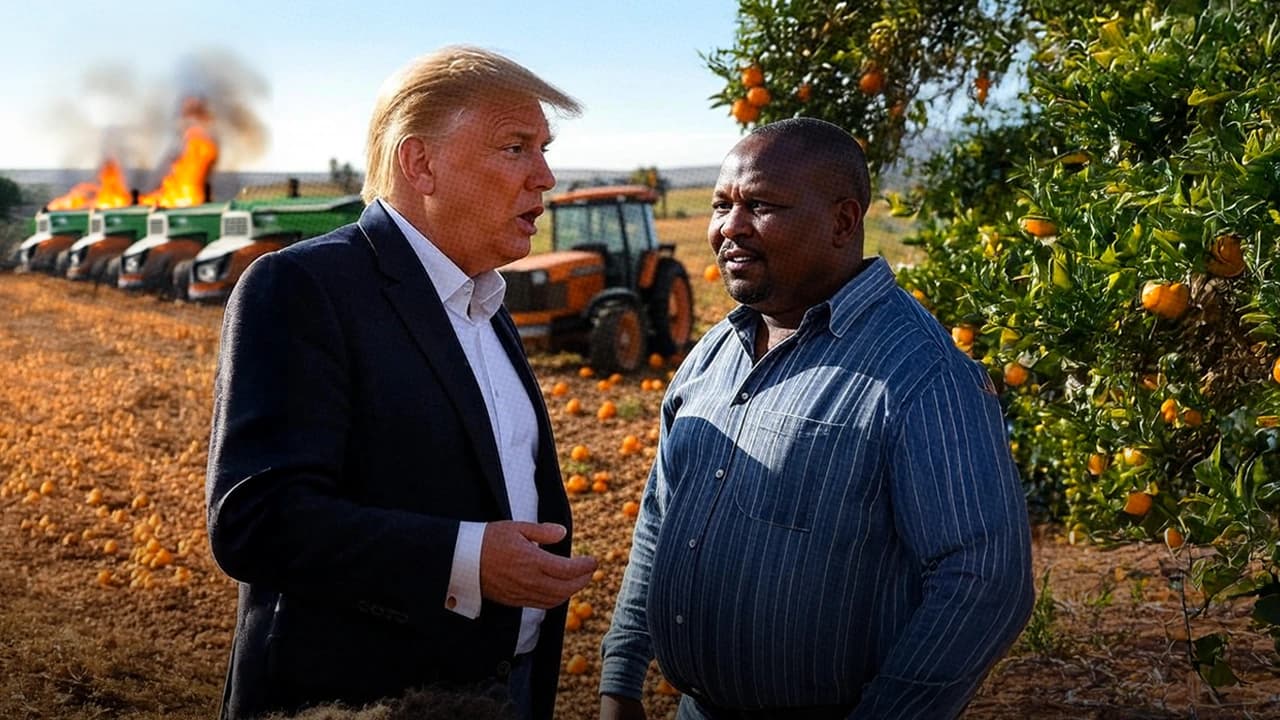
South Africa’s citrus industry is facing an existential threat due to looming US tariffs of 30–40%, set to come into effect on 1 August, after previously enjoying over 25 years of duty-free access under the African Growth and Opportunity Act (AGOA).
Since April this year, South African goods have already been subject to a 10% reciprocal tariff under US President Donald Trump’s new trade policies, excluding only copper, steel and automobiles. The citrus sector, along with grapes, wine and juices, is heavily affected as these are among South Africa’s top agricultural exports to the US, which grew 19% in Q1 of 2025 alone. [apnews.com]
US versus China

Instead of engaging with the US to renegotiate terms, six South African ministers, including Trade Minister Ebrahim Patel and Agriculture Minister John Steenhuisen, chose to spend seven days in China, attempting to shore up BRICS relations—despite those markets already imposing 30–40% tariffs on SA goods.
South Africa currently has no ambassador in Washington, no trade delegation on site and a “special envoy,” Mcebisi Jonas, who was reportedly denied a US diplomatic visa, leaving the country diplomatically flat-footed as the crisis escalates. [reuters.com]
Rivals ready to replace
The citrus season, which runs through October 2025, is now under immense pressure. Citrus Growers Association member Gert van der Merwe warns that the industry, built on over two decades of market trust and logistical infrastructure in the US, could lose both market share and confidence in a single season.
Rivals Chile and Peru, facing only 10% tariffs, stand ready to take over South Africa’s longstanding US market presence.
Diversifying dismissed
Calls to diversify markets are dismissed as impractical. According to van der Merwe and AgriSA’s Johan Kotzé, building new trade channels in India and China, where South Africa faces high tariffs and logistical challenges, could take 10–12 years—too late to save jobs or avoid collapse.
South Africa currently accounts for only 0.4% of China’s agricultural imports, illustrating how BRICS membership has not translated into trade advantages. Meanwhile, the SA government has made minimal diplomatic effort to preserve US trade ties, showing more interest in symbolic alliances than protecting local industries.
If no deal is reached, massive job losses, supply chain breakdowns, and lost investor confidence are likely outcomes. Van der Merwe emphasises that while farmers can weather short-term hits, long-term damage to the sector’s “confidence of supply” may permanently edge South Africa out of the US market.


