


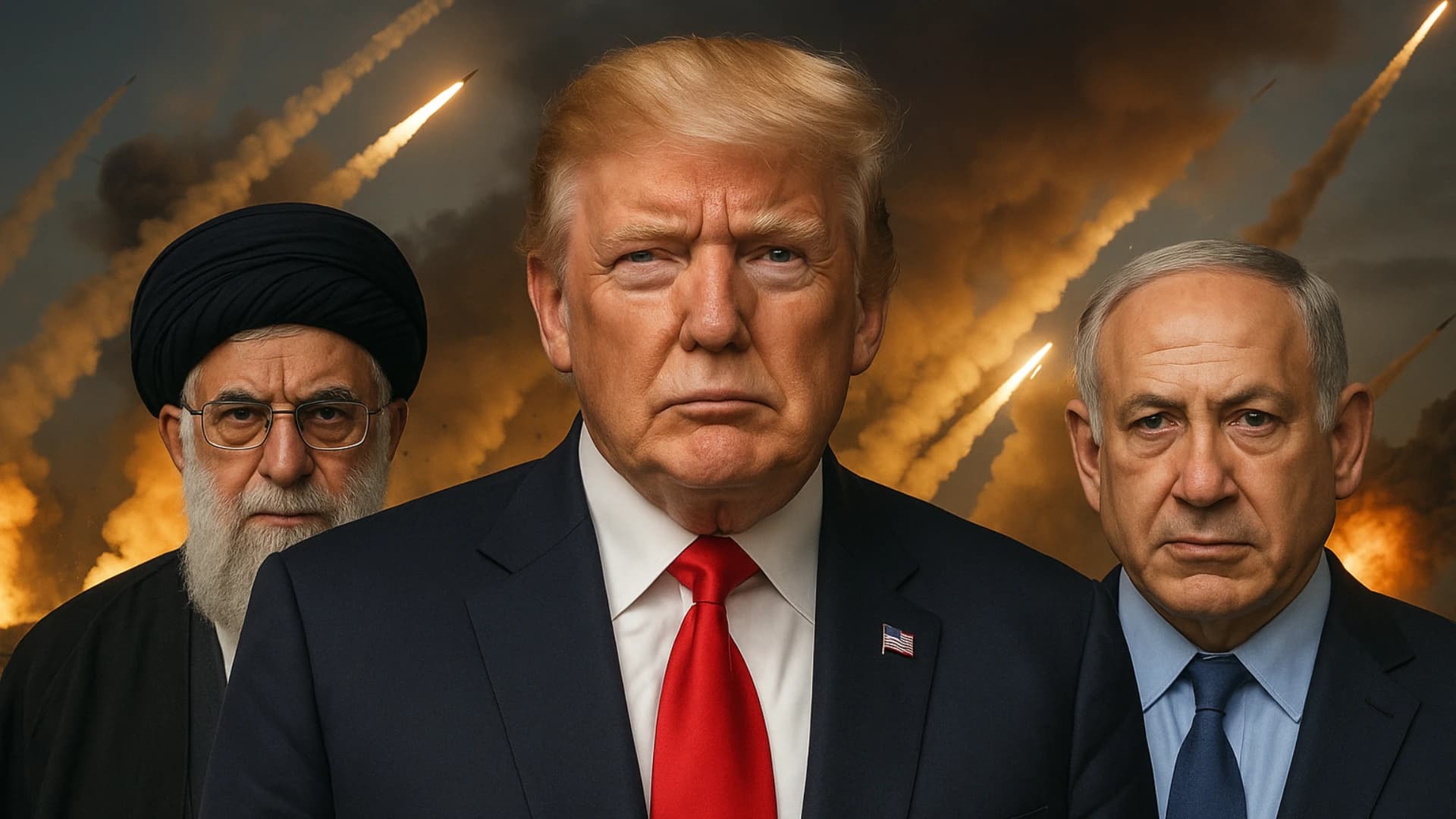
On Tuesday evening 24 June, Israeli Prime Minister Benjamin Netanyahu’s office issued a fresh statement confirming that a second ceasefire agreement had been reached via Qatari mediation, with backing from US negotiators.
Iran’s government, after initial denials, released a more conciliatory tone late Tuesday via IRNA, stating that “Iran will honour the ceasefire if Israel ceases its aggression”.
US President Donald Trump’s frustration about the matter was made clear when he dropped an f-bomb when asked by reporters about the distorted ceasefire deal on Tuesday. “We basically have two countries that have been fighting so long and so hard that they don’t know what the f*** they’re doing,” he said.
Ceasefire deal denial
Iran initially denied that a ceasefire agreement had been reached with Israel, contradicting an earlier announcement by Trump that the two countries had entered into a “complete and total” truce following nearly two weeks of hostilities.
In a post on X shortly after midnight, Iranian Foreign Minister Seyed Abbas Araghchi said no agreement had been made to halt military operations, although he indicated Iran may be willing to stop its response if Israeli strikes ceased.
As Iran has repeatedly made clear: Israel launched war on Iran, not the other way around.
— Seyed Abbas Araghchi (@araghchi) June 24, 2025
As of now, there is NO "agreement" on any ceasefire or cessation of military operations. However, provided that the Israeli regime stops its illegal aggression against the Iranian people no…
He added that a final decision on halting Iran’s military operations would be made “later”.
Trump announced the ceasefire earlier on Monday via his social media platform, Truth Social, saying the agreement would end what he called the “12-day war” between Israel and Iran. Israel initially confirmed it had suspended operations, saying military objectives had been met.
According to Reuters, a senior White House official, speaking on condition of anonymity, said Trump brokered the ceasefire during talks with Israeli Prime Minister Benjamin Netanyahu on Monday, while members of his team, including Vice President JD Vance, held discussions with Iranian officials.
Hostilities simmer up, down
Despite the announcement, hostilities appeared to continue. The Guardian reported that after Trump’s statement but before the truce came into effect, the IDF issued evacuation warnings for several areas of Tehran in anticipation of a planned Israeli strike. Social media users in Iran reported large explosions in the capital, describing them as the most intense since the conflict began.
The IDF on Monday posted on X that it had struck multiple Iranian targets, including IRGC command centres, Basij headquarters, and the intelligence wing of Iran’s internal security forces.
Much of the conflict has played out in real time on social media platforms, where governments and militaries have posted updates, warnings, and footage. Both the announcement of the ceasefire and the denial by Iran were made online, reflecting the increasingly digital nature of wartime communication.
Missile crossfire
The latest escalation followed Iran’s launch of missiles at a US base in Qatar on Monday.
US officials said the missiles were intercepted and there were no casualties. The Iranian strike came in response to a US airstrike two days earlier that targeted Iranian nuclear facilities.
In a televised address on Saturday, Trump had warned of further strikes if Iran responded.
Israeli officials have stated their military posture would remain defensive unless provoked.


