


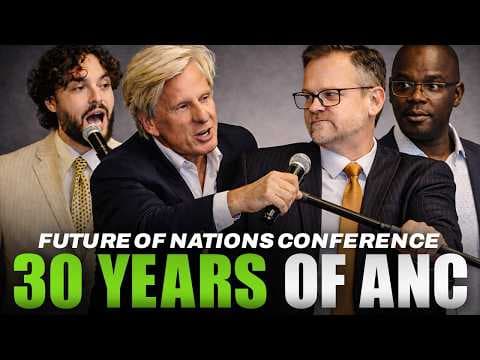
At the Future of Nations Conference, political thinkers, economists, and international commentators gathered to confront the most pressing questions facing South Africa today.

The discussion centered on the country’s struggling institutions, economic stagnation, and the growing political tensions shaping national debate. Speakers examined how decades of policy decisions and governance challenges have contributed to failing municipalities, deteriorating infrastructure, and rising frustration among citizens who feel the system is no longer delivering results.
A major focus of the conversation was the long term economic impact of governance under the African National Congress. Participants highlighted the consequences of cadre deployment, arguing that political loyalty has too often been prioritized over competence in key government positions. This, they said, has contributed to the weakening of major state institutions such as Eskom and Transnet, while a shrinking tax base continues to carry the burden of funding an expanding public sector. Economists at the conference warned that unless structural reforms are implemented, these pressures could place even greater strain on the country’s economy.
International voices at the conference also explored the broader ideological debates surrounding identity, nationhood, and minority rights in modern democracies. Questions were raised about whether South Africa should be understood as a single unified nation or a multinational society with competing political and cultural interests.
As global attention increasingly turns toward the country’s political trajectory, the conference made clear that the debates unfolding within South Africa are not just local issues but part of a wider international conversation about governance, democracy, and the future of diverse societies.


