


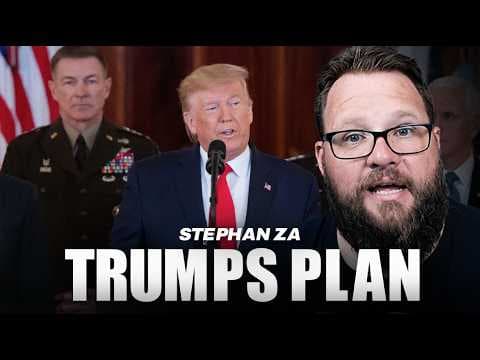
In this breakdown, the focus shifts from personalities to strategy, examining the geopolitical logic behind the actions of Donald Trump across flashpoints like Iran and Ukraine.

Rather than viewing decisions through a purely ideological lens, the discussion frames them within a broader framework of power, leverage, and national interest. This approach highlights how global politics often operates less on stated values and more on calculated outcomes, where influence and positioning take priority over narrative.
The analysis contrasts two competing schools of thought: traditional Western diplomacy, often associated with multilateralism and idealism, and a more hardline realist approach grounded in realpolitik and geo economics. According to this perspective, Trump’s method emphasizes pressure, negotiation strength, and strategic unpredictability, which can disrupt established norms but also force rapid shifts in global dynamics. This divergence helps explain why many political leaders and institutions appear unprepared for the pace and style of these moves.
Ultimately, the discussion places these developments within the context of a shifting global order, where alliances are being tested and power structures are evolving. As countries reassess their positions in response to changing strategies, the gap between ideological messaging and practical decision making becomes more visible.
By connecting these dots, the breakdown offers a clearer understanding of why global events are unfolding the way they are and why so many actors on the world stage are struggling to keep up.


