


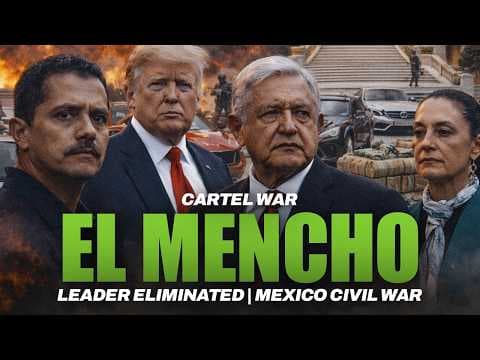
In this hard-hitting breakdown, we examine the reported killing of Ruben Oseguera Cervantes, widely known as “El Mencho,” the alleged leader of the Jalisco New Generation Cartel (CJNG), and the immediate shockwaves that followed.

The operation, reportedly shaped by sustained U.S. intelligence cooperation and mounting diplomatic pressure, triggered an aggressive security response across Mexico. Roadblocks, armed confrontations, and emergency deployments signaled just how volatile the balance of power had become. The consequences extend far beyond one criminal figure, touching cross-border security, migration flows, and the broader architecture of the global drug trade.
The fallout has been severe. Coordinated blockades across multiple states, dozens of fatalities including members of Mexico’s security forces, and widespread public disruption underscore how cartel structures respond when leadership is threatened. The designation of major cartels as terrorist organizations has intensified both rhetoric and enforcement strategy, raising questions about sovereignty, militarization, and the long-term sustainability of a kingpin-focused approach. Meanwhile, U.S.–Mexico relations face renewed strain as both governments navigate the political optics and operational risks of deeper cooperation.
History suggests that removing cartel leaders rarely ends violence, it often fragments it. Power vacuums can trigger splinter groups, internal turf wars, and escalated brutality as factions compete for control. The deeper issue remains structural: the enormous profitability of narcotics trafficking, persistent U.S. demand, weapons flows, corruption networks, and limited economic alternatives in cartel-dominated regions.
Whether this moment represents a decisive blow against organized crime or the beginning of a more chaotic phase will depend less on one operation, and more on whether the underlying incentives that fuel the drug war are meaningfully addressed.


