


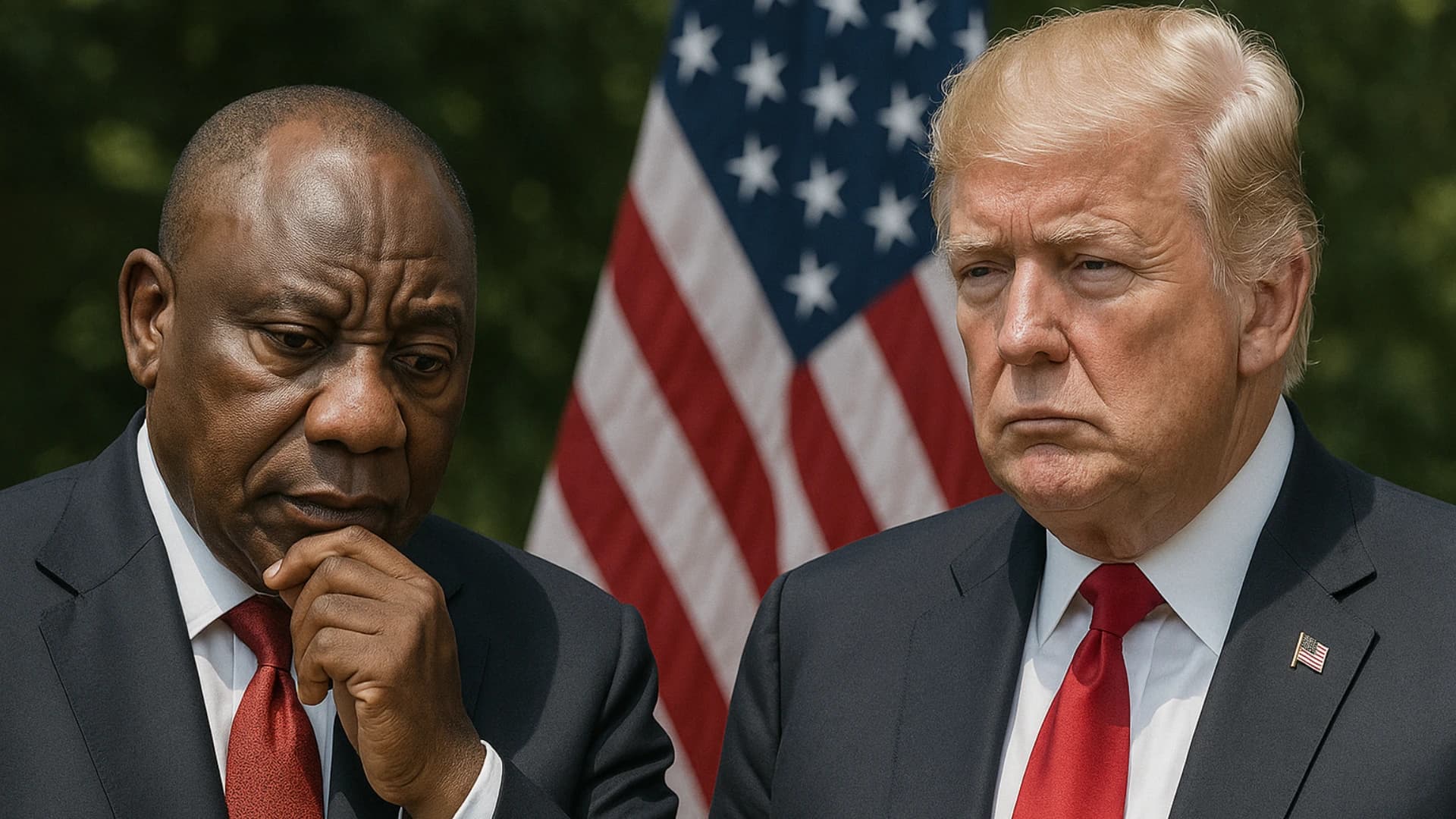
South Africa is reeling from the United States’ decision to impose a 30% trade tariff on its exports, announced by President Donald Trump in a letter to President Cyril Ramaphosa on Monday 7 July.
The move has triggered a wave of reactions, from urgent calls for diplomacy to political backlash, as the country grapples with the economic effect the tariff would have on exports such as citrus, grapes, wine, nuts and other key agricultural goods.
Tariffs hit in August
The tariff is set to take effect on 1 August but could be adjusted depending on negotiations between the two countries. Agriculture Minister John Steenhuisen expressed alarm, noting the tariff’s threat to thousands of jobs.
“Thousands of jobs in the agricultural sector are impacted and therefore we remain committed to constructive dialogue with our USA counterparts,” Steenhuisen said, vowing to work with Trade, Industry and Competition, International Relations and Cooperation, and Finance ministers to negotiate a fairer outcome.
His department is also pushing to explore new markets, reflecting a growing sense of urgency to mitigate the impact.
“They emphasised, firstly, that farm attacks and murders should be classified as priority crimes; that the ANC should clearly, unconditionally and unequivocally publicly condemn the “Kill the Boer” chant; and that no land expropriation will be done without fair and market-related compensation. – Ernst van Zyl, AfriForum spokesperson
President Cyril Ramaphosa’s spokesperson Vincent Magwenya issued a statement in which the presidency rejected the tariff’s premise, calling it a “contested interpretation” of trade data.
Balance of trade
“This 30% tariff is based on a particular interpretation of the balance of trade between South Africa and the United States,” he said, arguing it misrepresents reality. He cited that 56% of goods enter South Africa at a 0% most-favoured-nation tariff, with 77% of US goods enjoying duty-free access, and an average import tariff of 7.6%.
“South Africa will continue with its diplomatic efforts towards a more balanced and mutually beneficial trade relationship with the United States,” he added, welcoming the US offer to adjust the tariff post-negotiations.
AfriForum spokesperson Ernst van Zyl said the organisation held Ramaphosa and the ANC-led government “directly responsible” for the 30% tariff.
‘Reaping bitter fruits’
The organisation maintains that Ramaphosa and his government tried to dismiss the US’ concerns as the result of misinformation when they should have instead acknowledged and actively resolved US concerns. According to AfriForum, the country is now reaping the “bitter fruits” of this failure.
The 30% trade tariff imposed by the USA on South Africa is a serious setback for everyone in the country, except, of course, for the ruling elite, who will continue to enrich themselves at the expense of us all.@afriforum warned members of the ANC-led government, including… pic.twitter.com/ydouIkoz7H
— Kallie Kriel (@kalliekriel) July 8, 2025
He said the government had wasted the 90-day grace period for the imposition of the tariff and had made no progress resolving its diplomatic crisis with the Trump administration. Van Zyl added the organisation had repeatedly indicated ways in which the government can resolve the issues at the heart of the crisis.
“Instead of cooperating, the government has made unfounded allegations against AfriForum and claimed that the organisation is guilty of spreading misinformation. A desperate investigation for treason has even been launched against AfriForum – all for the ‘crime’ of pointing out the real issues,” Van Zyl said.
“Since the start of the diplomatic crisis, AfriForum has been committed to finding solutions to the issues at the core of the problem. Addressing these issues will, however, require humility from the ANC-led government and an immediate ceasing of the approach of denialism,” he said.
The Trump administration gave the South African government, along with other governments worldwide, three months to resolve the issues, AfriForum added, with the result that some countries did not come out of the grace period empty-handed.
Countries such as China, Vietnam, and the United Kingdom have managed to secure favourable trade deals through effective negotiations and their willingness to address the issues the Trump administration raised.
Conditions following Afrikaner delegation
AfriForum added that the Trump administration had recently reiterated its conditions and demands for salvaging diplomatic relations with the South African government to an Afrikaner delegation to the White House.
“They emphasised, firstly, that farm attacks and murders should be classified as priority crimes; that the ANC should clearly, unconditionally and unequivocally publicly condemn the “Kill the Boer” chant; and that no land expropriation will be done without fair and market-related compensation.
“Finally, American institutions should be exempted from all discriminatory race-based legislation such as black economic empowerment (BEE),” AfriForum said.
“None of these problems are insurmountable. On the contrary, the solutions outlined are quite fair, sensible and easily implementable by any government that does not pursue an extremist ideology.”


