


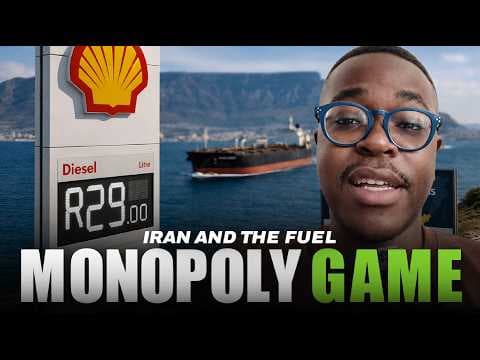
In this breakdown, we move past the headlines to examine what is really unfolding behind the Iran conflict, the tension in the Strait of Hormuz, and the wider global power struggle influencing energy markets.

As competing political narratives dominate the media, the underlying reality is far more strategic. Disruptions to key shipping routes, uncertainty around supply, and geopolitical signaling are all contributing to rising oil prices, creating ripple effects that extend well beyond the Middle East.
For South Africans, the impact is already visible at the fuel pump. Higher oil prices translate directly into increased transport costs, which then drive up the price of food, goods, and everyday living. But this is not simply a local issue. It reflects a global system where conflict, instability, and economic leverage are closely linked. The question is no longer just who is involved in the conflict, but who stands to gain from prolonged uncertainty and sustained pressure on global markets.
This situation highlights a broader pattern where geopolitical tensions evolve into economic consequences that are felt most by ordinary people. While leaders debate strategy and power, citizens face rising costs, reduced stability, and growing uncertainty about the future.
This is not only a military or political conflict. It is a complex intersection of economics, influence, and global positioning, where the true cost is often carried by those far removed from the decisions being made.


