


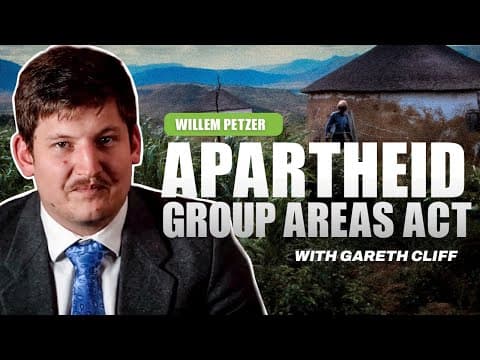
South Africans believe they already know the story of apartheid. A simple narrative of stolen land, useless Bantustans, and black communities dumped into barren homelands. But what if that story is far more complicated than we were ever allowed to believe?

What if the truth has been filtered, edited, and weaponised for political power? This interview shatters the comfortable version of history and forces the country to confront evidence that mainstream academics and media have avoided for decades.
Long before apartheid began, the 1913 Land Act did more than restrict black ownership — it also prevented mass European investors from buying tribal land, preserving sovereign territories. And later, during apartheid, the government expropriated white farmers not to steal land but to restore farmland back to the homelands because those regions held some of the richest agricultural soil in the country. These were the areas where tribes originally settled because of their fertility and survival value. This is not an apology for apartheid. This is an attack on propaganda — a challenge to a narrative that has shaped policy, emotion, and division for generations.
If the foundation of South Africa’s land story is built on distortions, then what does that mean for every modern policy: land reform, restorative justice, political mobilisation, and racial identity? How many of today’s conflicts, resentments, and economic failures are built on a historical myth nobody dares to question? South Africa remains trapped because our leaders fear dangerous questions — and our society punishes anyone who asks them. Today, that fear ends.
Watch. Think for yourself. Share before they try to silence this.


