


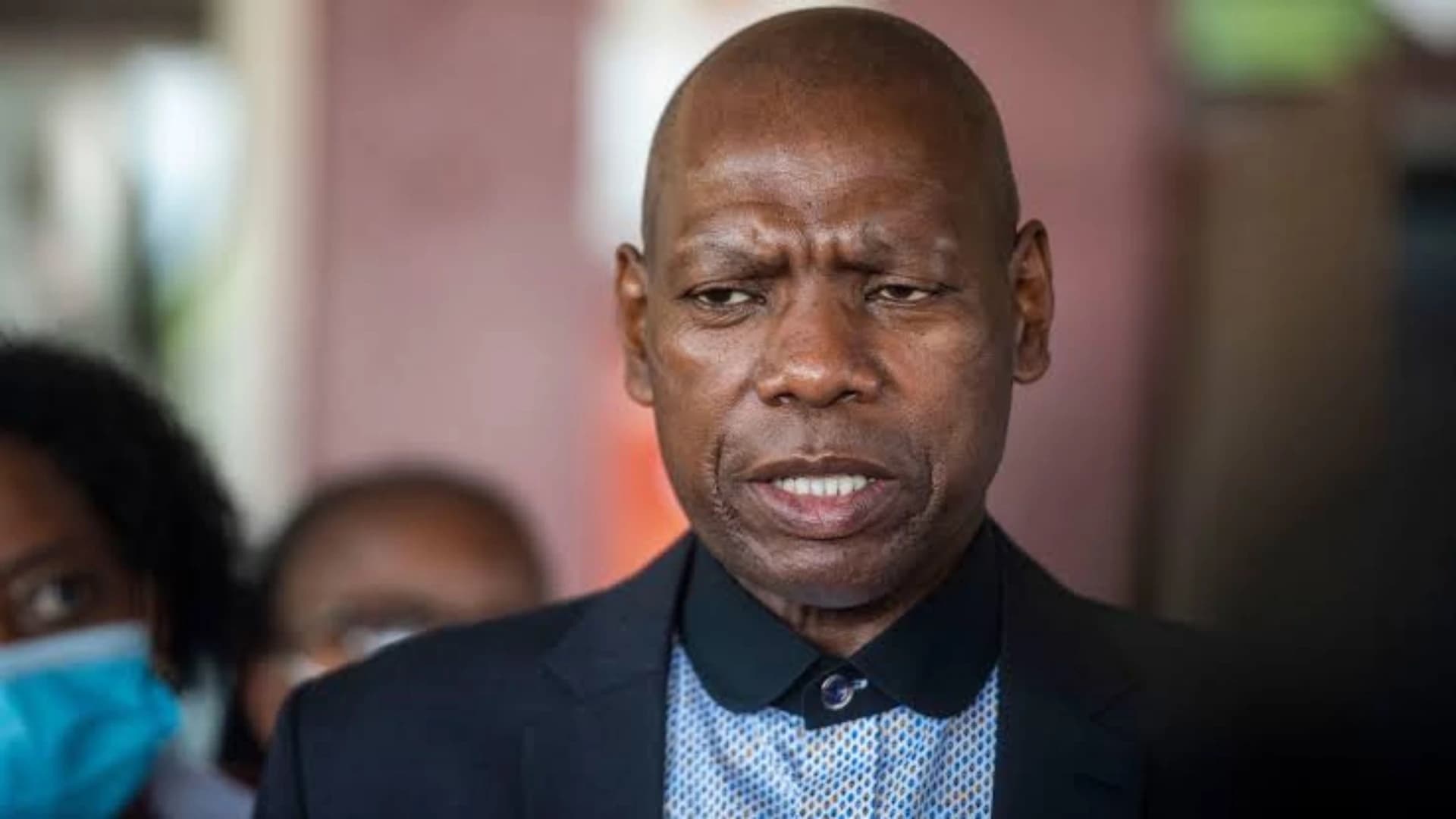
South African municipalities are facing a deepening financial and governance crisis, with widespread mismanagement, weak accountability and failing service delivery, the chairperson of the parliamentary committee on cooperative governance said on Monday 9 June.
Speaking at a media briefing in Cape Town, Dr. Zweli Mkhize, chairperson of the Cooperative Governance and Traditional Affairs (Cogta) committee, said the latest municipal audit outcomes presented by the Auditor-General revealed systemic failures.
Only 16% of municipalities achieved clean audits for the 2023/24 financial year, while 59% submitted financial statements with material misstatements.
‘Weak consequences’
“This is not just a question of financial literacy or technical capacity. It is not just an audit report. It is a mirror held up to our governance structures,” Mkhize said. “Poor audit outcomes are often rooted in failures of political leadership, weak consequence management and a culture of impunity.”
The findings showed that municipalities had spent more than R1.4 billion on consultants to prepare financial statements, despite employing permanent staff for this function. Mkhize described the spending as “unacceptable” and said it reflected a failure of systems and leadership.
The committee also raised concerns about 113 municipalities that were operating on unfunded budgets, planning to spend more than they could afford. “This is reckless in the extreme,” Mkhize said. “It amounts to planning for failure and undermines infrastructure delivery, job creation, and project execution.”
Weak municipal governance
A shortage of financial skills at the local government level had reached “crisis point,” he added, noting that the problem extended beyond technical capacity and pointed to structural weaknesses in municipal governance.
Irregular procurement practices also persisted, including the awarding of contracts to individuals employed in other spheres of government — a violation of procurement laws. Mkhize said such conduct must stop and called for greater enforcement and ethical leadership.
The committee found that 84% of municipalities participating in the national debt relief support programme had failed to meet its conditions. “That’s not only a compliance issue,” Mkhize said. “It signals a complete breakdown in accountability mechanisms.”
He said municipal councils, mayors, provincial treasuries and legislatures needed to be held accountable. “Parliament, through the Portfolio Committee on Cogta, will lead this effort. We will intensify oversight visits, focus on the worst-performing municipalities, and work with the executive at all levels.”
The committee, he said, was no longer interested in excuses. “We are calling for performance, consequences, and the prioritisation of quality service delivery to our people.”
Safety of cultural practices
Beyond financial governance, Mkhize also addressed the safety of cultural practices, particularly customary initiation rites. He welcomed the revised 2025 – 2030 strategic targets of the Department of Traditional Affairs, which aim to eliminate illegal initiation schools and reduce deaths and amputations from legal schools to zero by 2029.
“This is not just a symbolic target. It is a constitutional and moral obligation,” Mkhize said. “Initiation should not be a death sentence. We owe it to every child, every family, and every community to make that promise real.”
To achieve this, Mkhize called for a multi-departmental response involving the departments of Health, Social Development, Justice, SAPS, and traditional councils. “We can no longer use budget constraints as a reason for failure. We must innovate and collaborate,” he said.
Mkhize said the issues facing local government – from audit failures to unsafe initiation practices – reflected a broader crisis in governance and leadership. “We cannot afford to normalise failure. We must shift from analysis to action, and from crisis management to structural reform,” he said.
The committee, he added, was committed to restoring the credibility and capability of local government through firm oversight, accountability, and a focus on service delivery.


